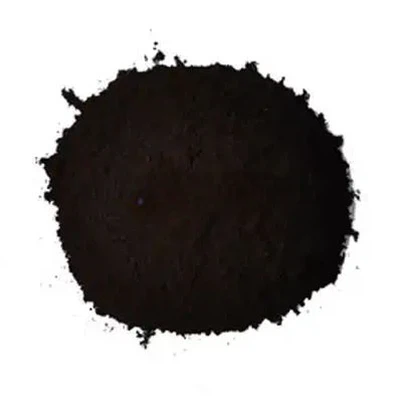
Sulphur Black Factory Sell Directly
Sulphur Black is one of the most widely used dyes in the textile industry, primarily for dyeing cellulose fibers. Here is a systematic introduction to its product knowledge, covering basic concepts, main types, core characteristics, and key specifications. 1. Basic Definition and Chemical...
Description
Sulphur Black is one of the most widely used dyes in the textile industry, primarily for dyeing cellulose fibers. Here is a systematic introduction to its product knowledge, covering basic concepts, main types, core characteristics, and key specifications.
1. Basic Definition and Chemical Properties
Sulphur Black (C.I. Sulphur Black 1, CAS: 1326-82-5) is a high-molecular compound primarily composed of sulfur. Its appearance is typically black flaky solids or powder. It is insoluble in water and alcohol but soluble in solutions of sodium sulfide, forming a black-green leuco compound. It is mainly produced by hydrolyzing 2,4-dinitrochlorobenzene and then subjecting it to a sulfuration reaction with sodium polysulfide.
2. Main Product Types
Based on form and solubility, Sulphur Black is mainly divided into the following categories:
Conventional Sulphur Black (e.g., BR 200%) It appears as bright black flakes or granules. It is soluble in sodium sulfide solution. This traditional type requires reduction with sodium sulfide for dyeing and is used for coloring cotton, linen, and viscose.
Water-Soluble Sulphur Black (S-BR) It appears as uniform black granules or powder. It is readily soluble in water. It offers convenience as it requires no reducing agent and is suitable for leather dyeing.
Liquid Sulphur Black It appears as a black liquid. It is ready to use. This type is environmentally friendly, contains fewer impurities, offers high absorption, and eliminates the need for dissolving solid dye with sodium sulfide.
3. Core Characteristics and Precautions
Tendering Effect (Fiber Damage): Conventional Sulphur Black contains unstable polysulfide bonds in its molecular structure. In a humid and hot atmosphere, it easily oxidizes to generate sulfuric acid, which can cause the cellulose fibers to become brittle and lose strength. Therefore, thorough washing after dyeing and anti-tendering treatment (using agents like urea or sodium acetate) is necessary, or one can directly choose anti-tendering Sulphur Black.
Color Shade Variations: Depending on the production process (such as sulfuration temperature and sodium polysulfide ratio), Sulphur Black can exhibit different color casts, including blueish shade (BN), blueish-reddish shade (BRN), and reddish shade (RN).
Color Fastness: Sulphur Black typically demonstrates good light fastness (up to grade 5-6) and washing fastness on cotton fabrics. However, its wet rubbing fastness is relatively low (usually grade 1-2).
4. Key Quality Indicators
Based on the industry standard HG/T3427-2001, the main specifications for prime grade Sulphur Black (e.g., BR 200%) are as follows.
The appearance should be bright black flakes or granules. The strength is 100% of the standard sample, with specifications like 200% or 240% indicating relative strength. Moisture content should be ≤6%. Insolubles in sodium sulfide solution should be ≤0.3% to 0.5%. The free sulfur content should be ≤0.5%.
5. Application Fields
Textile Dyeing: It is mainly used for dyeing cotton, linen, viscose, and vinylon/cotton blends. It is particularly suitable for dyeing deep shades such as black and blue.
Other Uses: Water-soluble Sulphur Black can also be used for leather dyeing and paper coloring.
Hot Tags: sulphur black factory sell directly, China sulphur black factory sell directly manufacturers, suppliers, factory, sulphur dyes for printed carpets, sulphur dyes for nonwoven fabrics, dyeing and printing, sulphur dyes for unbleached industrial textiles, sulphur dyes for antimicrobial fibers, sulphur dyes for treated yarns
Send Inquiry
You Might Also Like