

Your Professional Cationic Blue Dye Manufacturers
Formerly known as Jinzhou dongxing dyestuff plant, which was established in the early 1980s. Now our business covers acid dyes, solvent dyes,basic dyes, vat dyes, direct dyes, textile assistants and other chemicals, including edible and industrial cellulose, sodium pyrosulfite, sodium sulfite and amino-silicone oil. Our company has large-scale production plants in textile cloth, building materials and other fields and the export right, and actively develops the international market to expand overseas business.


Why Choose Us
Production Market
We are based in Hebei, China, start from 2004, sell to Southeast Asia(30.00%),Eastern Asia(20.00%), South Asia(20.00%), Domestic Market(10.00%), Northern Europe(6.00%), Africa(5.00%), Southern Europe(2.00%), Oceania(2.00%).
Rich Experience
Backed by decades of experience and a presence in 25+ cities, we bring unparalleled knowledge and foresight to every project.
Providing Solutions
Our 2 state-of-the-art manufacturing facilities and 30+ textile-chemical experts ensure the highest quality standards and innovative solutions tailored to your needs.
Rigorous Quality Control
Each product undergoes strict testing at various stages of production.Compliance with international quality standards.
Benefits of Cationic Blue Dye
Versatility
Cationic blue dyes are versatile since they can dye natural substrates like fur and skin and man-made fibers like nylon and acrylic. Thus, they are ideal for fulfilling various needs in a single product. Cationic blues can adhere to diverse substances effectively due to their ability to bind tightly to different surfaces. This makes them useful for designers and manufacturers who want consistent coloration across diverse materials.
High color intensity
Cationic blue dyes have a strong affinity for suitable substrates, making them quickly absorbed; thus, they impart deep, bright, and intense colors. They produce hues that serve as a stark contrast to lighter weathering elements. Such exceptional color intensity is especially vital while designing fabrics, for it results in more attractive and deeper hues.


Good fastness properties
The good fastness properties of cationic blue dyes refer to their resistance to washing, light, and other adverse environmental conditions. Fastness is a measure of stability or resistance to change of color in a dyed fabric, and cationic blue dyes possess this attribute due to their strong affinity for the substrates they dye. It means the dyed materials will not easily discolor or fade. Hence, the dyed materials will retain their aesthetic appeal over time.
Ecolabeling potential
Cationic blue dyes are eco-friendly due to the growing desirability of green chemical processes. Mostly, they can be produced and used without any harm or less than harm to human health and environmental health. Many basic dyes are now synthesized through more environmentally benign 'reduction' processes to avoid the harsh chemicals typical of older methods. This means less pollution and safer by-product management. From ecologically deriving these colorants to using them efficiently, cationic blue dyes contribute to sustainable practices.
Types of Cationic Blue Dye
Cationic dye C.I. Basic Blue
Cationic dye CI Basic Blue is a synthetic aniline dye derived from condensing dimethylamine with an isobutyraldehyde phenolic compound. It is mostly applied in acrylic, wool, nylon, and silk fabric dyeing, where it yields exceptionally bright and pure tones. Besides its textile applications, it also sporadically finds use in biological and pharmaceutical coloring due to its stability and vibrancy.
Cationic dye CI Basic Blue 3
Cationic dye CI Basic Blue 3 is derived from methylation of 4-dimethylaminobenzaldehyde, a phenolic compound, and a formyl substituent. Besides textiles, it occasionally colors paper, leather, and even some plastics. Color wise, Basic Blue 3 appears teal, with a Cationic blue CI number of 42002. It has outstanding solubility in water and high retention on cation exchange sites of most substrates.
Cationic dye CI Basic Blue 9
The structure of Cationic dye CI Basic Blue 9 is almost similar to that of Cationic dye CI Basic Blue 3, except for the additional methoxyl and dimethane amine groups on the phenolic compound. These augment its basicity and solubility properties. This dye has superior wash fastness, a distinct vibrant hue, and low toxicity, which makes it suitable for various textile applications.
Acrylic fibers can be dyed on corresponding equipment according to different forms such as loose fibers, tows, yarns, tops, etc. Fabrics can be dyed on rope dyeing machines, jiggers or pad dyeing machines.
Pure acrylic fabrics are either padded or dyed. When dyeing, the initial dyeing temperature should be below the glass transition temperature, preferably around 70°C. Then slowly heat up to boiling, dyeing for about 1h. When dyeing light colors, the dyeing temperature should be lower and the heating time can be longer; when dyeing thick colors, the dyeing temperature can be higher and the heating time can be shorter. It takes about 30 minutes to dye light colors, and 60 to 90 minutes to dye medium and thick colors.

Products Description of Cationic Blue Dye
|
Product Name |
Basic Blue ,Cationic Blue , Cationic Blue X-GL |
|
C.I.NO. |
11105 |
|
CAS NO. |
12270-13-2 |
|
EINECS NO. |
235-546-0 |
|
Molecular Formula |
C20H26N4O6S2 |
|
Appearance |
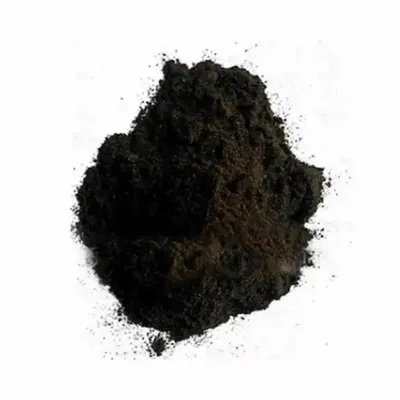
Dark Blue Powder |
|
Usage |
For Acrylic Fibers |
|
Strength |
250% |
|
Type |
Cationic dye |
|
H.S.CODE |
3204160000 |
|
Sample |
Available |
Lead Time
|
Quantity (kilograms) |
1 - 100 |
101 - 1000 |
1001 - 2000 |
> 2000 |
|
Lead time (days) |
7 |
15 |
20 |
To be negotiated |
Packaging & Shipping


FAQ
As one of the leading cationic blue dye manufacturers and suppliers in China, we warmly welcome you to buy cheap cationic blue dye from our factory. All our products are with high quality and competitive price.
Cationic Blue 159