


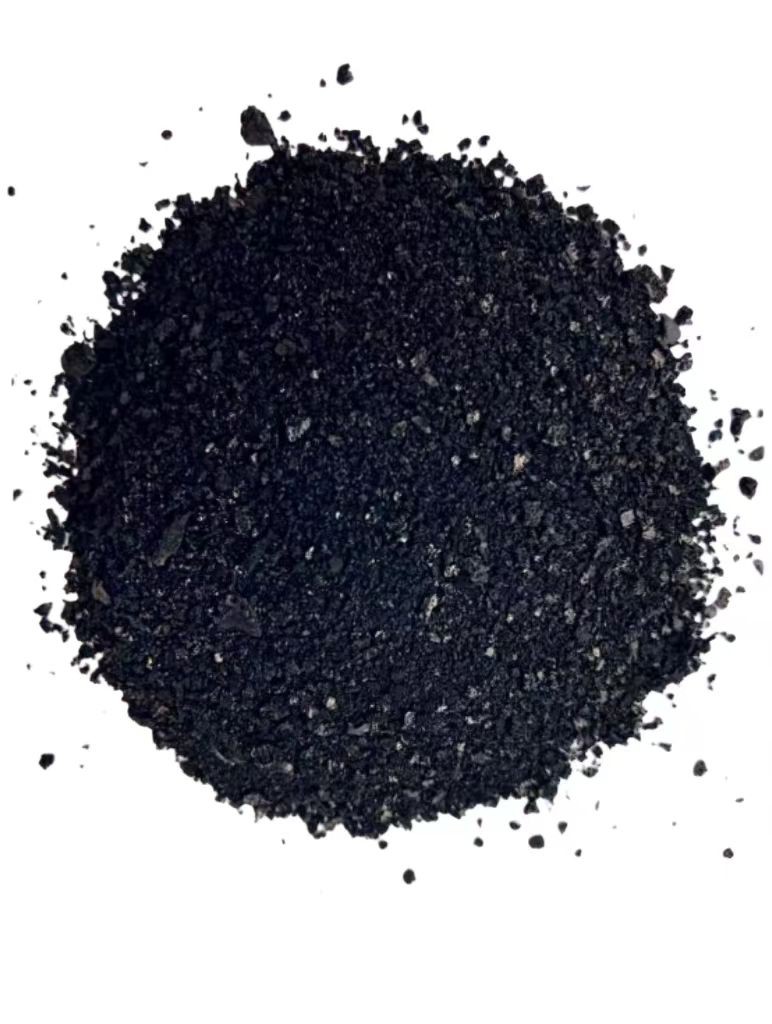
Sulfur Black: The Workhorse Of The Dye Industry And Its Spotlight At CHINA INTERDYE 2026

Sulfur Black: The Workhorse Of The Dye Industry And Its Spotlight At CHINA INTERDYE 2026 suppliers
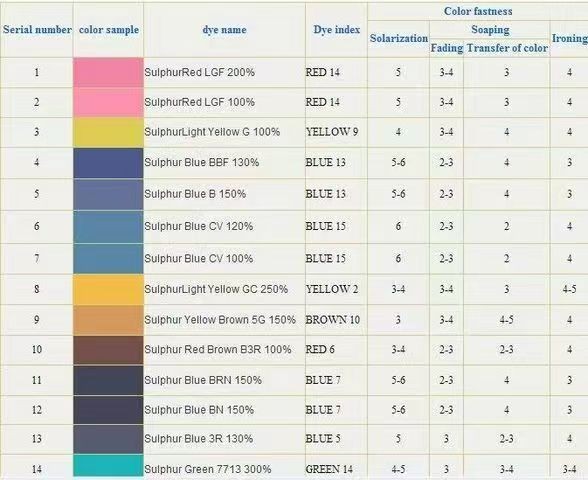
Sulfur Black: The Workhorse Of The Dye Industry And Its Spotlight At CHINA INTERDYE 2026 factory
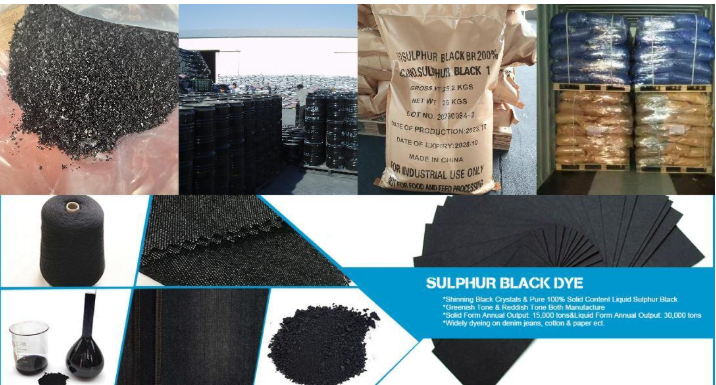
Sulfur Black: The Workhorse Of The Dye Industry And Its Spotlight At CHINA INTERDYE 2026 best

Sulfur Black: The Workhorse Of The Dye Industry And Its Spotlight At CHINA INTERDYE 2026 high quality
Sulfur Black: The Workhorse Of The Dye Industry And Its Spotlight At CHINA INTERDYE 2026
Introduction: The King of Sulfur Dyes In the global dye industry, no other colorant combines affordability, depth of shade, and production volume quite like Sulfur Black. As the most produced and consumed sulfur dye in the world, it accounts for an estimated 75% to 85% of total sulfur dye...
Description
Introduction: The King of Sulfur Dyes
In the global dye industry, no other colorant combines affordability, depth of shade, and production volume quite like Sulfur Black. As the most produced and consumed sulfur dye in the world, it accounts for an estimated 75% to 85% of total sulfur dye production . Known colloquially as Sulfur Black, Sulfur Yuan, or Sulfur Qing, this dye is the backbone of dark-colored cellulosic textiles, particularly for cotton, viscose, linen, and their blends . Its significance is such that it forms a critical product category for nearly every major dye manufacturer exhibiting at CHINA INTERDYE 2026 in Shanghai.
Chemical Identity and Historical Context
Sulfur Black is not a single chemical compound but a class of complex heterocyclic polymers containing disulfide (S-S) and polysulfide bonds. Chemically, it is typically produced by the reaction of 2,4-dinitrochlorobenzene or 2,4-dinitrophenol with sodium polysulfide (Na₂Sₓ), followed by air oxidation .
The history of Sulfur Black dates back to 1893, when R. Vidal first synthesized a black dye by fusing p-aminophenol with sodium sulfide and sulfur . This breakthrough followed the initial invention of sulfur dyes in 1873. For over a century, Sulfur Black has remained indispensable because it offers a unique value proposition: extremely low cost, high tinctorial strength, and excellent wash fastness . Unlike some alternative black dyes that may raise carcinogenicity concerns, Sulfur Black is widely regarded as non-carcinogenic, making it a safer choice for workers and end-users .
Product Variants and Commercial Grades
Sulfur Black is commercially available in several forms to suit different application methods and equipment. At CHINA INTERDYE 2026, visitors can expect to see the following variants on display:
1. Powdered Sulfur Black (Conventional) : The traditional form, with a general structure of D-S-S-D. It is insoluble in water and requires dissolution in a sodium sulfide (Na₂S) solution to convert it into a water-soluble leuco form before dyeing . A common commercial grade is Sulfur Black BR 200% (Double Sulfur Black) , which is a standardized product with 100% strength relative to the standard, appearing as bright black flakes or granules. This specific grade offers excellent dyeing depth, with a 6% depth (owf) achieving a standard black shade .
2. Water-Soluble Sulfur Black : Modern versions with a structure of D-SSO₃Na. These are sulfur-thiosulfates that dissolve directly in water without the need for pre-reduction, offering better leveling properties and less dusting .
3. Liquid Sulfur Black (Pre-reduced) : Formulated as D-SNa, these liquids contain a reducing agent (sodium sulfide) and are ready to use directly in the dye bath. They eliminate the dust problem associated with powders and improve batch-to-batch consistency .
4. Eco-Friendly Sulfur Black : A critical innovation for the 2026 market. These grades contain significantly lower levels of free sulfur and polysulfides. They are designed to be used with binary reducing systems (e.g., glucose and sodium hydrosulfite) instead of heavy sodium sulfide, drastically reducing the toxic sulfide content in wastewater .
The Dyeing Mechanism: A Redox Process
Sulfur Black follows a unique application process similar to vat dyes, consisting of four key stages :
1. Reduction (Dissolution) : The insoluble Sulfur Black is treated with a reducing agent (traditionally sodium sulfide) and alkali. The reducing agent cleaves the disulfide bonds, converting the dye into a leuco form (sodium salt of the thiol), which is water-soluble and has a high affinity for cellulose fibers.
2. Exhaustion (Adsorption) : The leuco form of Sulfur Black is absorbed from the dye bath into the amorphous regions of the cotton fiber. The affinity is driven by strong van der Waals forces and hydrogen bonding, facilitated by the large molecular size of the reduced dye .
3. Oxidation (Fixation) : After the dye has diffused into the fiber, it must be re-oxidized. The leuco form is converted back to the insoluble, colored form (re-forming the S-S bonds). This is often achieved simply by exposure to air (air oxidation) or using mild oxidizing agents. This step locks the dye inside the fiber, ensuring high wash fastness .
4. Post-Treatment : A critical final step. Residual sulfur compounds left in the fabric can slowly oxidize in the air to form sulfuric acid, which hydrolyzes and weakens (brittle) the cotton over time. Post-treatment involves thorough washing and the application of anti-brittleness agents such as urea, trisodium phosphate, or sodium acetate to neutralize any acid formation .
Performance Characteristics and Fastness Properties
Sulfur Black is selected for specific performance profiles. According to technical data sheets for grades like Sulfur Black BR 200%, the fastness properties on cotton are notable :
· Light Fastness (Xenon) : 6 (on a scale of 1-8, very good).
· Washing Fastness (95°C) : 3-4 for color change, 4-5 for staining (good to very good).
· Rubbing Fastness : Dry rubbing is typically 4-5 (excellent), but wet rubbing is 2-3 (moderate). This is a known limitation of conventional Sulfur Black due to the large particle size of the oxidized dye on the fiber surface.
· Perspiration Fastness : 4-5 (very good).
However, the industry is aware of its weaknesses. Compared to reactive dyes, Sulfur Black has duller shades (primarily a greenish-blue or reddish-black cast) and lower wet rubbing fastness .
Environmental Challenges and Innovations at CHINA INTERDYE 2026
The primary challenge facing traditional Sulfur Black is its environmental footprint. Conventional dyeing requires high doses of sodium sulfide (Na₂S) . Excess sulfide in wastewater generates highly toxic hydrogen sulfide (H₂S) gas, which is corrosive, malodorous, and hazardous to aquatic life and human health . Treating this sulfide-rich effluent is costly.
CHINA INTERDYE 2026 is the primary venue where solutions to these challenges are showcased. Under the show's theme of "Green Development," exhibitors will likely focus on:
· Sulfide-free or low-sulfide Sulfur Black : Products pre-reduced with safer chemistries.
· Alternative Reducing Systems : Demonstrating the use of eco-friendly reducing agents like glucose combined with sodium hydrosulfite to replace sodium sulfide entirely, allowing for "Green Sulfur Black" dyeing .
· Advanced Post-Treatment Chemicals : New anti-brittleness agents and washing-off auxiliaries that reduce water consumption.
Sulfur Black at the Exhibition: What to Look For
For a professional visiting CHINA INTERDYE 2026, the Sulfur Black segment will be concentrated in the Dyestuffs Hall .
Visitors should look for:
· High wet-rub grades: Modified Sulfur Blacks that achieve wet rubbing fastness of 3 or higher.
· Eco-label certifications: Products compliant with ZDHC (Zero Discharge of Hazardous Chemicals) and bluesign standards.
· Digital integration: Liquid Sulfur Black formulations designed for automated dispensing systems in modern textile mills.
Conclusion
Sulfur Black remains an irreplaceable commodity in the textile value chain. Its unparalleled cost-effectiveness and deep black shade drive massive global demand. However, the future of Sulfur Black, as will be evident at CHINA INTERDYE 2026, lies in green chemistry. The transition from traditional sodium sulfide reduction to eco-friendly, low-sulfur, and liquid forms is not just a trend but a necessity driven by regulation and corporate sustainability goals. For any textile mill producing dark shades, the innovations in Sulfur Black presented in Shanghai in April 2026 will be key to maintaining both profitability and environmental compliance.
Hot Tags: sulfur black: the workhorse of the dye industry and its spotlight at china interdye 2026, China sulfur black: the workhorse of the dye industry and its spotlight at china interdye 2026 manufacturers, suppliers, factory, sulphur dyes for degradable fibers, sulphur dyes for unmercerized fibers, sulphur dyes for synthetic fibers, sulphur dyes for non degradable fibers, sulphur dyes for filament dyeing, sulphur dyes for printing
Send Inquiry
You Might Also Like


