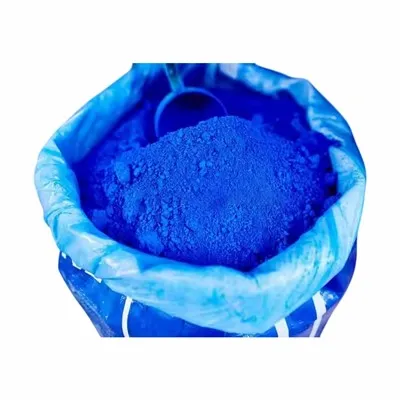
What are the quality standards for Acid Blue 9?
Leave a message

As a supplier of Acid Blue 9, I am often asked about the quality standards for this particular dye. In this blog post, I will delve into the various aspects that define the quality of Acid Blue 9, providing insights from a scientific perspective to help you understand what makes a high - quality product.
Chemical Composition
The most fundamental quality standard for Acid Blue 9 lies in its chemical composition. Acid Blue 9, also known as Brilliant Blue FCF, has a specific chemical formula: C₃₇H₃₄N₂Na₂O₉S₃. A high - quality Acid Blue 9 should adhere strictly to this chemical formula, with minimal impurities. The presence of impurities can affect both the color intensity and the stability of the dye. For example, if there are other chemically similar compounds mixed in, it might cause a shift in the color hue, resulting in a product that does not meet the expected color standards.
To ensure the correct chemical composition, advanced analytical techniques such as high - performance liquid chromatography (HPLC) and mass spectrometry are employed during the manufacturing process. These methods can accurately identify and quantify the components of the dye, allowing us to confirm that the Acid Blue 9 we produce has the right chemical makeup.
Color Quality
Color is one of the most important aspects of Acid Blue 9, as it is primarily used for coloring various products, including food, beverages, and cosmetics. The color quality of Acid Blue 9 is evaluated based on several factors.
Hue
The hue of Acid Blue 9 should be a pure, vivid blue. Any deviation from the standard blue color can be a sign of poor quality. For instance, a greenish or purplish tint might indicate the presence of impurities or improper manufacturing conditions. We use colorimeters to measure the hue accurately, comparing it against a standardized color chart. This ensures that the Acid Blue 9 we supply has a consistent and desirable hue.
Color Intensity
Color intensity refers to the strength of the color. A high - quality Acid Blue 9 should be highly concentrated, meaning that a small amount of the dye can produce a deep and rich color. This is important for cost - effectiveness and for achieving the desired color in the final product. We test the color intensity by preparing solutions of Acid Blue 9 at a specific concentration and measuring the absorbance of light at a particular wavelength using a spectrophotometer. A higher absorbance value indicates a more intense color.
Color Stability
Color stability is crucial, especially when Acid Blue 9 is used in products that are exposed to different environmental conditions. The dye should maintain its color over time, without fading or changing due to factors such as light, heat, or pH. We conduct stability tests by subjecting samples of Acid Blue 9 to different light intensities, temperatures, and pH levels. By monitoring the color changes over a period of time, we can ensure that our Acid Blue 9 has excellent color stability.
Purity
Purity is another key quality standard for Acid Blue 9. A high - purity product is essential for applications where safety and performance are of utmost importance, such as in the food and beverage industry.
Heavy Metal Content
Heavy metals, such as lead, mercury, and cadmium, can be extremely harmful to human health. Therefore, the content of heavy metals in Acid Blue 9 must be strictly controlled. We use atomic absorption spectroscopy (AAS) to measure the levels of heavy metals in our products. The allowable limits for heavy metals are set by regulatory agencies, and our Acid Blue 9 always meets or exceeds these standards to ensure the safety of end - users.
Organic Impurities
In addition to heavy metals, organic impurities can also affect the quality of Acid Blue 9. Organic impurities might come from the raw materials used in the manufacturing process or from side reactions. These impurities can cause issues such as reduced color stability or unwanted side effects in the final product. We use techniques like gas chromatography - mass spectrometry (GC - MS) to detect and quantify organic impurities, ensuring that our Acid Blue 9 has a high level of purity.
Solubility
Solubility is an important characteristic of Acid Blue 9, as it determines how easily the dye can be incorporated into different products. A high - quality Acid Blue 9 should have good solubility in water and other common solvents used in the industry.
We test the solubility of Acid Blue 9 by adding a specific amount of the dye to a known volume of solvent and observing the time it takes for the dye to dissolve completely. The solubility should be consistent across different batches of the product. If the solubility is poor, it can lead to problems such as uneven coloring or the formation of clumps in the final product.
Regulatory Compliance
As a supplier of Acid Blue 9, we are committed to ensuring that our products comply with all relevant regulatory requirements. Different countries and regions have their own regulations regarding the use of dyes in various products. For example, in the United States, the Food and Drug Administration (FDA) has strict regulations on the use of Acid Blue 9 in food and beverages. In the European Union, the European Food Safety Authority (EFSA) sets the standards for food additives, including Acid Blue 9.
We stay up - to - date with these regulations and conduct regular audits to ensure that our manufacturing processes and products meet all the necessary requirements. By complying with regulations, we not only ensure the safety of our customers but also build trust in our brand.
Comparison with Similar Dyes
It is also useful to compare Acid Blue 9 with other similar dyes on the market, such as Acid Blue 7 and Acid Red 87.
Acid Blue 7 has a different chemical structure and color characteristics compared to Acid Blue 9. While Acid Blue 7 might have its own advantages in certain applications, Acid Blue 9 is known for its bright and stable blue color, which makes it a popular choice for many products.
Acid Red 87 is a red dye, and its properties are completely different from those of Acid Blue 9. The choice between these dyes depends on the specific requirements of the application, such as the desired color, the type of product, and the regulatory environment.
Conclusion
In conclusion, the quality standards for Acid Blue 9 are multi - faceted, encompassing chemical composition, color quality, purity, solubility, and regulatory compliance. As a supplier, we are dedicated to producing Acid Blue 9 that meets the highest quality standards. By using advanced analytical techniques and strict quality control measures, we ensure that our customers receive a product that is both safe and effective.
If you are in the market for high - quality Acid Blue 9, I encourage you to explore our product. You can learn more about our Acid Blue 9 by visiting the provided link. If you have any questions or are interested in procurement, please feel free to contact us for further discussions.


References
- Handbook of Food Additive Toxicology
- Principles of Dye Chemistry
- Regulatory documents from FDA and EFSA