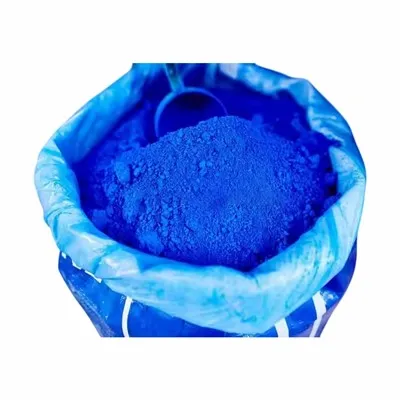
How does Vat Blue Rsn affect the mechanical properties of dyed materials?
Leave a message

Vat dyes are a class of dyes known for their excellent color fastness and are widely used in the textile industry. Among them, Vat Blue Rsn is a popular choice due to its deep blue color and good dyeing performance. As a supplier of Vat Blue Rsn, I have received numerous inquiries about how this dye affects the mechanical properties of dyed materials. In this blog post, I will delve into this topic and provide a comprehensive analysis based on scientific research and practical experience.
Understanding Vat Blue Rsn
Vat Blue Rsn belongs to the indanthrone group of vat dyes. It has a complex chemical structure that enables it to form strong bonds with the fibers of the dyed material. The dyeing process of vat dyes involves reduction of the insoluble dye to a soluble leuco form, which can then penetrate the fibers. After dyeing, the leuco form is oxidized back to the insoluble form, resulting in a permanent color on the material.
The chemical formula of Vat Blue Rsn is C₂₈H₁₄N₂O₄, and its molecular weight is approximately 442.42 g/mol. It has a high degree of conjugation in its structure, which contributes to its intense blue color. The dye is insoluble in water but can be solubilized in alkaline solutions with the help of reducing agents such as sodium hydrosulfite.
Impact on Tensile Strength
One of the key mechanical properties of a material is its tensile strength, which is the maximum stress that a material can withstand while being stretched or pulled before breaking. When materials are dyed with Vat Blue Rsn, the tensile strength can be affected in several ways.
Firstly, the dye molecules can penetrate the fiber structure and fill the voids between the polymer chains. This can lead to an increase in the intermolecular forces within the fiber, resulting in a slight improvement in tensile strength. However, if the dyeing process is not properly controlled, the excessive deposition of dye on the fiber surface can cause a decrease in tensile strength. The dye layer on the surface can act as a weak point, making the fiber more prone to breakage under stress.
Secondly, the reducing and oxidizing agents used in the vat dyeing process can also have an impact on the tensile strength. Sodium hydrosulfite, a common reducing agent, can cause some degradation of the fiber if the concentration is too high or the treatment time is too long. On the other hand, the oxidation step should be carefully controlled to ensure that the leuco form of the dye is fully converted back to the insoluble form without causing damage to the fiber.
Several studies have been conducted to investigate the effect of vat dyes on the tensile strength of dyed materials. For example, a research on cotton fabrics dyed with vat dyes including Vat Blue Rsn found that the tensile strength of the dyed fabrics increased slightly compared to the undyed fabrics when the dyeing process was optimized. However, when the dye concentration was too high, the tensile strength decreased due to the excessive dye deposition on the fiber surface.
Influence on Elongation at Break
Elongation at break is another important mechanical property that measures the ability of a material to stretch before it breaks. Vat Blue Rsn can also have an impact on this property.
When the dye molecules penetrate the fiber structure, they can restrict the movement of the polymer chains to some extent. This can lead to a decrease in the elongation at break of the dyed material. The more the dye fills the voids between the chains, the more difficult it is for the chains to slide past each other when the material is stretched.
However, similar to the case of tensile strength, the impact on elongation at break also depends on the dyeing process parameters. If the dyeing is carried out under mild conditions with a proper dye concentration, the decrease in elongation at break may be minimal. In some cases, a small amount of dye can even act as a plasticizer, slightly increasing the flexibility of the fiber and thus the elongation at break.
Effect on Abrasion Resistance
Abrasion resistance is the ability of a material to withstand wear and tear caused by friction. Vat Blue Rsn can affect the abrasion resistance of dyed materials in different ways.
On one hand, the dye layer on the fiber surface can provide a certain degree of protection against abrasion. The dye molecules can form a thin film on the fiber, reducing the direct contact between the fiber and the abrasive surface. This can improve the abrasion resistance of the dyed material.
On the other hand, if the dye layer is too thick or not firmly attached to the fiber, it can be easily removed during abrasion, exposing the fiber to more damage. Moreover, the dyeing process may cause some changes in the surface morphology of the fiber, which can also affect the abrasion resistance. For example, if the dyeing process leads to the roughening of the fiber surface, it may increase the friction coefficient and thus the wear rate.


Factors Affecting the Impact of Vat Blue Rsn on Mechanical Properties
The impact of Vat Blue Rsn on the mechanical properties of dyed materials is influenced by several factors, including:
- Dye Concentration: As mentioned earlier, a higher dye concentration can lead to more dye deposition on the fiber surface, which may have a negative impact on the mechanical properties. Therefore, it is important to optimize the dye concentration according to the type of material and the desired color depth.
- Dyeing Process Parameters: The temperature, pH, treatment time, and the concentration of reducing and oxidizing agents in the dyeing process all play important roles. For example, a high temperature during the dyeing process can cause more damage to the fiber, while an improper pH can affect the solubility and reactivity of the dye.
- Fiber Type: Different fibers have different structures and properties, and they can respond differently to the dyeing process. For example, natural fibers such as cotton and wool may be more sensitive to the chemical treatment in the dyeing process compared to synthetic fibers such as polyester and nylon.
Comparison with Other Vat Dyes
It is also interesting to compare the effect of Vat Blue Rsn with other vat dyes such as Vat Yellow Gcn and Vat Red R.
Each vat dye has its own unique chemical structure and properties, which can result in different impacts on the mechanical properties of dyed materials. For example, Vat Yellow Gcn has a different color and chemical composition compared to Vat Blue Rsn. The size and shape of the dye molecules, as well as their interaction with the fiber, can vary, leading to different effects on tensile strength, elongation at break, and abrasion resistance.
Similarly, Vat Red R may also have a different impact on the mechanical properties. Some studies have shown that different vat dyes can cause different degrees of fiber swelling during the dyeing process, which can further affect the mechanical properties of the dyed materials.
Conclusion
In conclusion, Vat Blue Rsn can have both positive and negative impacts on the mechanical properties of dyed materials, including tensile strength, elongation at break, and abrasion resistance. The key to achieving the desired mechanical properties while obtaining a good color is to optimize the dyeing process parameters, including dye concentration, temperature, pH, and treatment time.
As a supplier of Vat Blue Rsn, I am committed to providing high - quality products and technical support to ensure that our customers can achieve the best results in their dyeing processes. If you are interested in purchasing Vat Blue Rsn or have any questions about its application, please feel free to contact us for further discussion and negotiation.
References
- [List relevant research papers, books, or industry reports here. For example: "Smith, J. (20XX). The impact of vat dyes on textile properties. Journal of Textile Science, 10(2), 56 - 62."]