How do direct dyes absorb and reflect light?
Leave a message

Direct dyes are a popular choice in various industries, including textiles, paper, and leather, due to their ease of application and wide range of available colors. As a direct dyes supplier, I often encounter questions about how these dyes interact with light, specifically how they absorb and reflect it. Understanding this process is crucial not only for scientists and researchers but also for our customers who want to achieve the best possible coloring results. In this blog post, I will delve into the science behind how direct dyes absorb and reflect light.
The Basics of Light and Color Perception
To understand how direct dyes interact with light, we first need to grasp some fundamental concepts about light and color perception. Visible light is a form of electromagnetic radiation that consists of a spectrum of wavelengths, ranging from approximately 380 to 750 nanometers (nm). Each wavelength within this spectrum corresponds to a different color that our eyes can perceive. For example, shorter wavelengths around 380 - 450 nm are perceived as violet, while longer wavelengths around 620 - 750 nm are perceived as red.
When light strikes an object, three things can happen: it can be absorbed, reflected, or transmitted. The color we see is determined by the wavelengths of light that are reflected or transmitted by the object. If an object absorbs all wavelengths of visible light, it appears black. Conversely, if it reflects all wavelengths, it appears white. Most objects, including dyed materials, absorb some wavelengths and reflect others, resulting in the perception of color.
Chemical Structure of Direct Dyes
Direct dyes are typically organic compounds that contain chromophores, which are groups of atoms responsible for the absorption of light. These chromophores have specific electronic structures that allow them to absorb certain wavelengths of light while reflecting others. The most common chromophores in direct dyes include azo groups (-N=N-), anthraquinone groups, and triarylmethane groups.
The azo group is the most widely used chromophore in direct dyes. It consists of a nitrogen - nitrogen double bond (-N=N-) connected to two aromatic rings. The presence of the azo group allows the dye molecule to absorb light in the visible spectrum, resulting in the characteristic color of the dye. The color of the dye can be adjusted by modifying the structure of the aromatic rings attached to the azo group, such as by adding different substituents.
Anthraquinone - based direct dyes have a different chromophore structure. They contain an anthraquinone nucleus, which is a polycyclic aromatic compound. Anthraquinone dyes often have good lightfastness and are used in applications where color stability is important. Triarylmethane dyes, on the other hand, have a central carbon atom connected to three aromatic rings. They are known for their bright and intense colors.


Absorption of Light by Direct Dyes
The absorption of light by direct dyes occurs when the energy of the incident light matches the energy difference between the ground state and an excited state of the dye molecule. When a photon of light is absorbed, an electron in the dye molecule is promoted from the ground state to an excited state. This process is governed by the principles of quantum mechanics.
The absorption spectrum of a direct dye shows the wavelengths of light that are absorbed by the dye. Different dyes have different absorption spectra, which determine their color. For example, a dye that absorbs light in the blue - green region of the spectrum will appear red because the remaining wavelengths that are reflected or transmitted are perceived as red by our eyes.
The intensity of absorption is related to the concentration of the dye and the path length of the light through the dyed material. According to the Beer - Lambert law, the absorbance (A) of a solution is proportional to the concentration (c) of the absorbing species, the path length (l) of the light through the solution, and the molar absorptivity (ε) of the species at a particular wavelength. Mathematically, it is expressed as A = εcl.
In the case of dyed materials, the same principle applies. The more dye molecules are present in the material, the more light will be absorbed at the characteristic wavelengths of the dye. This is why a higher concentration of dye generally results in a darker and more intense color.
Reflection of Light by Direct Dyes
After the absorption of light, the non - absorbed wavelengths are reflected or transmitted. The reflection of light by direct dyes is influenced by several factors, including the surface properties of the dyed material, the distribution of the dye within the material, and the interaction between the dye and the substrate.
The surface smoothness of the dyed material affects the way light is reflected. A smooth surface will reflect light in a more specular manner, resulting in a shiny appearance. In contrast, a rough surface will scatter the reflected light in different directions, giving a matte appearance.
The distribution of the dye within the material also plays a role. If the dye is evenly distributed throughout the material, the reflection of light will be more uniform, resulting in a consistent color. However, if the dye is unevenly distributed, there may be variations in color and appearance.
The interaction between the dye and the substrate can also affect the reflection of light. For example, some dyes may form strong bonds with the substrate, which can change the way the dye molecules interact with light. This can lead to differences in color and lightfastness compared to dyes that have a weaker interaction with the substrate.
Examples of Direct Dyes and Their Color Properties
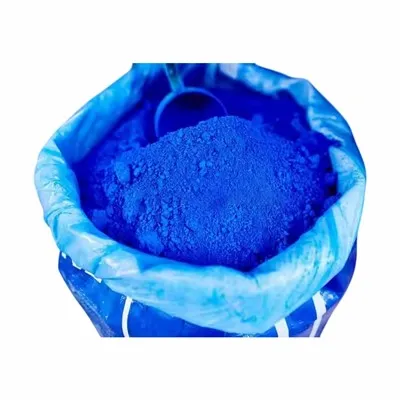
Let's take a look at some specific examples of direct dyes and their color properties. Direct Blue Brn is a direct dye that has a characteristic blue color. Its absorption spectrum shows that it absorbs light in the orange - red region of the spectrum, which is why it appears blue. This dye is commonly used in textile dyeing to achieve a range of blue shades.
Direct Brown Gtl is another example. It absorbs light in the blue - green region, resulting in a brown color. This dye is often used in paper and leather applications to provide a natural - looking brown color.
Direct Black Vsf is a black direct dye. It absorbs a wide range of wavelengths across the visible spectrum, which is why it appears black. Black direct dyes are used in many industries where a deep, intense black color is required.
Applications and Considerations
Understanding how direct dyes absorb and reflect light is essential for various applications. In the textile industry, for example, manufacturers need to select the right dyes to achieve the desired color and colorfastness. By knowing the absorption and reflection properties of different dyes, they can also control the shade and intensity of the color.
In the paper industry, direct dyes are used to color paper products. The interaction between the dye and the paper fibers can affect the final color and appearance of the paper. By understanding the light - absorption and reflection mechanisms, paper manufacturers can optimize the dyeing process to achieve consistent and high - quality results.
In addition, when using direct dyes, it is important to consider factors such as lightfastness, washfastness, and environmental impact. Some dyes may fade over time when exposed to light or washing, which can be a problem in applications where color stability is required. As a direct dyes supplier, we offer a range of dyes with different properties to meet the specific needs of our customers.
Contact Us for Direct Dyes Procurement
If you are interested in purchasing direct dyes for your business, we are here to help. Our company offers a wide range of high - quality direct dyes with various colors and properties. Whether you are in the textile, paper, or leather industry, we can provide you with the right dyes to meet your requirements.
We have a team of experts who can assist you in selecting the most suitable dyes for your application. We also offer technical support to ensure that you achieve the best possible results. To discuss your direct dyes procurement needs, please feel free to contact us. We look forward to working with you to provide the best coloring solutions for your business.
References
- Zollinger, H. (2003). Color Chemistry: Syntheses, Properties and Applications of Organic Dyes and Pigments. Wiley - VCH.
- Griffiths, J. (1976). Colour and Constitution of Organic Molecules. Academic Press.
- Lewis, D. M. (Ed.). (1992). The Chemistry of Synthetic Dyes. Academic Press.