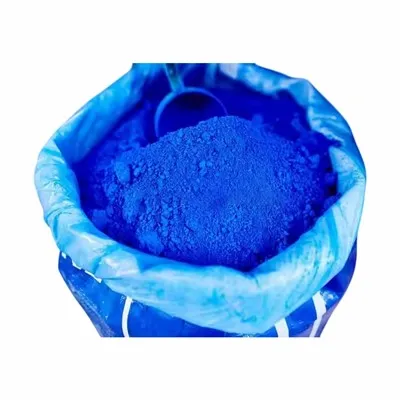
How does Acid Blue 9 work as a dye in leather?
Leave a message

Hey there! I'm a supplier of Acid Blue 9, and today I'm gonna dive into how this awesome dye works in leather.
First off, let's get a bit of background on Acid Blue 9. It's a well - known acid dye, and you can check out more about it Acid Blue 9. Acid dyes are a group of water - soluble dyes that are mainly used for dyeing protein fibers like wool, silk, and also leather.
The Basics of Leather Dyeing
Leather is a natural material made from animal hides. Before dyeing, the leather usually goes through a series of pre - treatment steps. This includes cleaning to remove any dirt, grease, or other impurities. Tanning is also a crucial step, which stabilizes the leather structure and makes it more durable.
When it comes to dyeing leather with Acid Blue 9, the process is based on the chemical properties of both the dye and the leather. Leather has a lot of amino groups on its surface. These amino groups are positively charged under acidic conditions. Acid Blue 9, on the other hand, is an anionic dye. That means it has a negative charge.
How Acid Blue 9 Binds to Leather
The binding between Acid Blue 9 and leather is mainly through ionic bonds. In an acidic dyeing bath, the amino groups in the leather are protonated, becoming positively charged. The negatively charged Acid Blue 9 molecules are attracted to these positively charged sites on the leather. This electrostatic attraction is the primary force that makes the dye stick to the leather.
Another important aspect is the affinity of the dye for the leather. Acid Blue 9 has a high affinity for leather because of its molecular structure. The dye molecules are designed in such a way that they can fit well into the pores and spaces in the leather's structure. This physical interaction also helps in the dyeing process.
The Dyeing Process
Let's walk through the actual dyeing process using Acid Blue 9. First, you need to prepare the dye bath. You dissolve the Acid Blue 9 in water. The amount of dye you use depends on how deep you want the color to be. Usually, you'll start with a small amount and adjust as needed.
The pH of the dye bath is crucial. Acid dyes work best in an acidic environment. You can use acetic acid or other acids to adjust the pH to the optimal range, usually around 3 - 5. This acidic environment helps in protonating the amino groups in the leather and also keeps the dye in its anionic form.
Once the dye bath is ready, you immerse the leather in it. You need to make sure the leather is fully submerged and that the dye can penetrate evenly. You might need to stir the bath gently to ensure good circulation.
The temperature of the dye bath also plays a role. Generally, a slightly elevated temperature, around 50 - 60 degrees Celsius, can speed up the dyeing process. But you have to be careful not to overheat the leather, as it can damage its structure.
As the leather sits in the dye bath, the Acid Blue 9 molecules start to migrate from the solution to the leather. The ionic bonds form between the dye and the leather, and the dye gradually penetrates deeper into the leather's structure.
Advantages of Using Acid Blue 9 in Leather Dyeing
One of the big advantages of Acid Blue 9 is its colorfastness. Once it's bound to the leather, it doesn't easily fade. This means that the leather products dyed with Acid Blue 9 will keep their color for a long time, even with regular use.
It also provides a very rich and vivid blue color. Whether you're making leather shoes, bags, or jackets, Acid Blue 9 can give your products a really eye - catching look.
Another benefit is its versatility. It can be used on different types of leather, including full - grain, top - grain, and corrected - grain leather.
Comparison with Other Acid Dyes
There are other acid dyes out there, like Acid Blue 7 and Acid Red 92. Acid Blue 7 has a different chemical structure and color shade compared to Acid Blue 9. While Acid Blue 7 might be better for some specific applications where a different blue tone is required, Acid Blue 9 is often preferred for its deep and consistent blue color.
Acid Red 92, on the other hand, is a red dye. Obviously, if you're looking for a blue color, Acid Red 92 won't be the right choice. But it shows that there's a wide range of acid dyes available, and each has its own unique properties.
Quality Control
As a supplier of Acid Blue 9, I understand the importance of quality control. We make sure that our Acid Blue 9 meets high - quality standards. This includes testing for purity, color strength, and stability.
We also provide technical support to our customers. If you're having any issues with the dyeing process, like uneven color or poor colorfastness, we can help you troubleshoot.

Conclusion
So, that's how Acid Blue 9 works as a dye in leather. It's a great option for anyone looking to add a beautiful blue color to their leather products. Whether you're a small - scale leather craftsman or a large - scale manufacturer, Acid Blue 9 can meet your needs.
If you're interested in purchasing Acid Blue 9 for your leather dyeing projects, don't hesitate to reach out. We're here to help you get the best results with our high - quality dye.
References
- Textile Dyeing and Finishing Handbook, various authors
- Journal of Leather Science and Technology, multiple issues