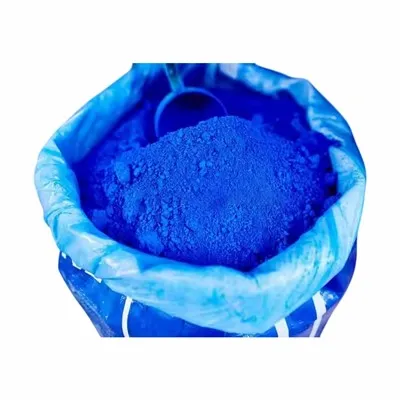
How does pH affect direct dyes?
Leave a message

As a direct dyes supplier, I've witnessed firsthand the intricate relationship between pH levels and the performance of direct dyes. Direct dyes are a popular choice in various industries, including textiles, paper, and leather, due to their ease of application and wide range of colors. However, the pH of the dyeing medium can significantly influence the dyeing process, color fastness, and overall quality of the dyed product. In this blog post, I'll delve into the science behind how pH affects direct dyes and share some practical insights for achieving optimal results.
Understanding Direct Dyes
Before we explore the impact of pH, let's briefly review what direct dyes are. Direct dyes are water-soluble dyes that can be applied directly to the substrate without the need for a mordant. They contain sulfonic acid groups (-SO3H) or carboxylic acid groups (-COOH) that make them soluble in water and allow them to form hydrogen bonds with the fibers of the substrate. This direct attachment to the fibers gives direct dyes their characteristic ease of application and good leveling properties.
The Role of pH in Dyeing
The pH of the dyeing medium plays a crucial role in the dyeing process. It affects the ionization state of the dye molecules, the charge of the fiber surface, and the interaction between the dye and the fiber. Here's a closer look at how pH influences these factors:
Ionization of Dye Molecules
Direct dyes are typically acidic or basic in nature, depending on the presence of acidic or basic functional groups in their chemical structure. At low pH values, acidic dyes are in their protonated form, which makes them more soluble in water and less likely to interact with the fiber. As the pH increases, the acidic dyes become deprotonated, forming negatively charged ions that can interact with the positively charged sites on the fiber surface through electrostatic attraction.
On the other hand, basic dyes are in their protonated form at high pH values, which makes them more soluble in water and more likely to interact with the negatively charged sites on the fiber surface. As the pH decreases, the basic dyes become deprotonated, forming neutral molecules that are less likely to interact with the fiber.
Charge of the Fiber Surface
The charge of the fiber surface also depends on the pH of the dyeing medium. At low pH values, the fiber surface tends to be positively charged due to the protonation of amino groups or other basic functional groups. This positive charge attracts negatively charged dye ions, facilitating the dyeing process. As the pH increases, the fiber surface becomes more negatively charged due to the deprotonation of acidic groups, which can repel negatively charged dye ions and reduce the dye uptake.
Interaction between Dye and Fiber
The interaction between the dye and the fiber is influenced by both the ionization state of the dye molecules and the charge of the fiber surface. At the optimal pH, the dye molecules and the fiber surface have complementary charges, which allows for strong electrostatic attraction and efficient dye uptake. However, if the pH is too low or too high, the electrostatic attraction between the dye and the fiber may be weakened, resulting in poor dye uptake and uneven coloration.
Effects of pH on Dyeing Performance
The pH of the dyeing medium can have a significant impact on the dyeing performance, including color yield, color fastness, and leveling properties. Here's a closer look at how pH affects these aspects:
Color Yield
The color yield refers to the amount of dye that is absorbed by the fiber and contributes to the final color of the dyed product. At the optimal pH, the dye molecules are in the appropriate ionization state and can interact effectively with the fiber surface, resulting in high color yield. However, if the pH is too low or too high, the dye uptake may be reduced, leading to lower color yield and lighter shades.
Color Fastness
Color fastness refers to the ability of the dyed product to retain its color under various conditions, such as washing, rubbing, and exposure to light. The pH of the dyeing medium can affect the color fastness of direct dyes by influencing the strength of the interaction between the dye and the fiber. At the optimal pH, the dye molecules are firmly attached to the fiber surface, resulting in good color fastness. However, if the pH is too low or too high, the dye may be more easily removed from the fiber, leading to poor color fastness.
Leveling Properties
Leveling properties refer to the ability of the dye to distribute evenly on the fiber surface, resulting in a uniform coloration. The pH of the dyeing medium can affect the leveling properties of direct dyes by influencing the rate of dye diffusion and the interaction between the dye and the fiber. At the optimal pH, the dye molecules can diffuse evenly into the fiber and interact with the fiber surface in a uniform manner, resulting in good leveling properties. However, if the pH is too low or too high, the dye may diffuse unevenly or interact with the fiber surface in a non-uniform manner, leading to poor leveling properties and uneven coloration.
Practical Considerations for pH Control
To achieve optimal dyeing results with direct dyes, it's important to control the pH of the dyeing medium carefully. Here are some practical considerations for pH control:


Determine the Optimal pH
The optimal pH for dyeing with direct dyes depends on the type of dye, the substrate, and the dyeing conditions. It's important to consult the dye manufacturer's recommendations or conduct preliminary tests to determine the optimal pH for your specific application.
Use pH Buffers
pH buffers are solutions that can resist changes in pH when small amounts of acid or base are added. Using pH buffers can help maintain a stable pH during the dyeing process and ensure consistent dyeing results.
Monitor the pH
It's important to monitor the pH of the dyeing medium regularly during the dyeing process to ensure that it remains within the optimal range. You can use a pH meter or pH indicator strips to measure the pH.
Adjust the pH as Needed
If the pH of the dyeing medium deviates from the optimal range, you can adjust it by adding small amounts of acid or base. It's important to add the acid or base slowly and stir the dyeing medium thoroughly to ensure uniform mixing.
Conclusion
In conclusion, the pH of the dyeing medium plays a crucial role in the performance of direct dyes. By understanding how pH affects the ionization state of the dye molecules, the charge of the fiber surface, and the interaction between the dye and the fiber, you can optimize the dyeing process and achieve consistent, high-quality results. As a direct dyes supplier, I'm committed to providing our customers with the highest quality dyes and technical support to help them achieve their dyeing goals. If you have any questions or need further information about direct dyes or pH control, please don't hesitate to [contact us for procurement and negotiation].
References
- Allen, R. L. M. (1971). The Chemistry of Synthetic Dyes. Academic Press.
- Christie, R. M. (2001). Dyeing of Textiles. Woodhead Publishing.
- Zollinger, H. (2003). Color Chemistry: Synthesis, Properties, and Applications of Organic Dyes and Pigments. Wiley-VCH.