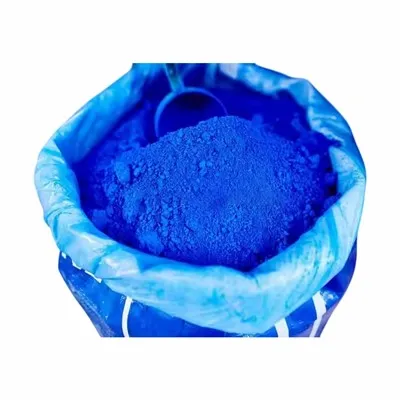
How do basic dyes work?
Leave a message

Basic dyes, a cornerstone in the world of coloring agents, have been widely used across various industries for their vibrant hues and efficient coloring properties. As a leading supplier of basic dyes, I am often asked about how these remarkable substances work. In this blog post, I will delve into the science behind basic dyes, exploring their composition, mechanism of action, and applications.
Composition of Basic Dyes
Basic dyes are organic compounds that typically contain amino groups (-NH₂) or substituted amino groups. These groups are responsible for the positive charge of the dye molecules in solution. The positive charge is a key characteristic that differentiates basic dyes from other types of dyes, such as acidic dyes, which carry a negative charge.
The basic structure of a basic dye consists of a chromophore, which is the part of the molecule responsible for absorbing light and giving the dye its color, and an auxochrome, which enhances the color and solubility of the dye. The chromophore can be a variety of chemical groups, such as azo groups (-N=N-), anthraquinone groups, or triarylmethane groups. The auxochrome usually contains nitrogen, oxygen, or sulfur atoms, which can donate electrons to the chromophore and increase its ability to absorb light.
Mechanism of Action
The working mechanism of basic dyes is primarily based on electrostatic attraction. In an aqueous solution, basic dyes dissociate into positively charged dye cations and negatively charged anions. These positively charged dye cations are attracted to negatively charged surfaces, such as the surfaces of cells, fibers, or other materials.


Dyeing of Biological Samples
In biological staining, basic dyes are commonly used to stain cell nuclei and other negatively charged components of cells. For example, Basic Blue7 and Basic Blue9 are often used in histological staining to visualize cell structures under a microscope. The negatively charged phosphate groups in DNA and RNA attract the positively charged basic dye cations, resulting in the staining of the cell nuclei.
The staining process typically involves several steps. First, the biological sample is fixed to preserve its structure. Then, the sample is immersed in a solution of the basic dye. The dye cations bind to the negatively charged components of the cells through electrostatic forces. After staining, the sample is usually washed to remove any excess dye, and then it can be observed under a microscope.
Dyeing of Textile Fibers
In the textile industry, basic dyes are used to color synthetic fibers, such as acrylic and modacrylic fibers. These fibers have a negative surface charge due to the presence of polar groups in their structure. The positively charged basic dye cations are attracted to the negatively charged fiber surfaces and penetrate into the fiber structure.
The dyeing process of textile fibers involves several factors, including temperature, pH, and the presence of dye auxiliaries. The temperature affects the rate of dye diffusion into the fibers. Higher temperatures generally increase the diffusion rate, but they also need to be carefully controlled to avoid damage to the fibers. The pH of the dye bath is also important, as it can affect the ionization state of the dye and the fiber surface. Dye auxiliaries, such as leveling agents and dispersing agents, are often added to the dye bath to improve the dyeing process and ensure uniform coloration.
Factors Affecting the Performance of Basic Dyes
Several factors can affect the performance of basic dyes, including the chemical structure of the dye, the nature of the substrate, and the dyeing conditions.
Chemical Structure of the Dye
The chemical structure of the dye determines its color, solubility, and affinity for the substrate. Different chromophores and auxochromes can result in dyes with different colors and properties. For example, dyes with azo chromophores are often bright and have good lightfastness, while dyes with triarylmethane chromophores are known for their intense colors.
The solubility of the dye is also an important factor. Basic dyes are generally soluble in water, but their solubility can be affected by the presence of other substances in the solution, such as salts or acids. Insoluble dyes may form aggregates or precipitate in the dye bath, which can lead to uneven dyeing.
Nature of the Substrate
The nature of the substrate, such as its chemical composition, surface charge, and porosity, can significantly affect the dyeing process. Different substrates have different affinities for basic dyes. For example, acrylic fibers have a high affinity for basic dyes due to their negative surface charge, while natural fibers, such as cotton and wool, have a lower affinity and may require pretreatment to improve dye uptake.
The porosity of the substrate also affects the dyeing process. More porous substrates allow the dye molecules to penetrate more easily, resulting in better coloration. However, excessive porosity can also lead to poor color fastness, as the dye may be more easily removed from the substrate.
Dyeing Conditions
The dyeing conditions, including temperature, pH, and dye concentration, can have a significant impact on the dyeing results. As mentioned earlier, temperature affects the rate of dye diffusion into the substrate. pH can affect the ionization state of the dye and the substrate surface, which in turn affects the dye-substrate interaction. The dye concentration determines the amount of dye available for binding to the substrate. Higher dye concentrations generally result in darker colors, but they also increase the risk of uneven dyeing and dye aggregation.
Applications of Basic Dyes
Basic dyes have a wide range of applications in various industries, including textiles, paper, leather, and biological sciences.
Textile Industry
As mentioned earlier, basic dyes are widely used in the textile industry to color synthetic fibers, such as acrylic and modacrylic fibers. They are known for their bright colors and good color fastness. Basic dyes can also be used in combination with other dyes to create unique color effects.
Paper Industry
In the paper industry, basic dyes are used to color paper products, such as tissue paper, wrapping paper, and printing paper. They are often used in combination with other additives to improve the color quality and durability of the paper.
Leather Industry
Basic dyes are also used in the leather industry to color leather products, such as shoes, bags, and furniture. They can penetrate into the leather structure and provide long-lasting coloration.
Biological Sciences
In biological sciences, basic dyes are essential tools for staining and visualizing biological samples. They are used in histological staining, microbiology, and cytology to study cell structures and functions.
Conclusion
In conclusion, basic dyes work through electrostatic attraction between the positively charged dye cations and the negatively charged surfaces of substrates. Their performance is affected by various factors, including the chemical structure of the dye, the nature of the substrate, and the dyeing conditions. Basic dyes have a wide range of applications in different industries, thanks to their vibrant colors and efficient coloring properties.
If you are interested in purchasing high-quality basic dyes for your specific applications, I invite you to contact us for further discussion. We are committed to providing our customers with the best products and services. Whether you are in the textile, paper, leather, or biological sciences industry, we have the right basic dyes to meet your needs.
References
- Zollinger, H. (2003). Color Chemistry: Syntheses, Properties, and Applications of Organic Dyes and Pigments. Wiley-VCH.
- Christie, R. M. (2001). Dyeing and Chemical Technology of Textile Fibres. Woodhead Publishing.
- Lillie, R. D. (1977). Histopathologic Technic and Practical Histochemistry. McGraw-Hill.