How do vat dyes work?
Leave a message

Vat dyes are a class of dyes known for their excellent color fastness and are widely used in the textile industry. As a vat dyes supplier, I am often asked about how these dyes work. In this blog post, I will delve into the science behind vat dyes, explaining their unique properties, the dyeing process, and their advantages.
The Chemistry of Vat Dyes
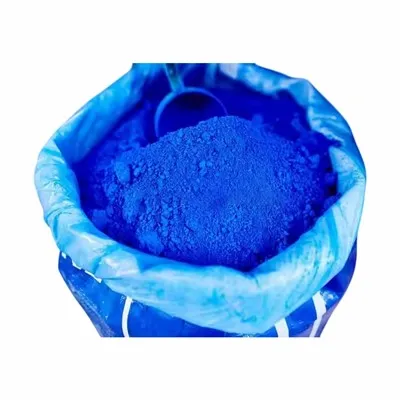
Vat dyes are insoluble in water in their original state. They are typically large, complex organic molecules with a characteristic quinone structure. This structure gives vat dyes their intense color and stability. However, the insolubility of vat dyes in water poses a challenge for the dyeing process. To overcome this, vat dyes undergo a chemical reduction process to convert them into a soluble form.
The reduction process involves the use of a reducing agent, such as sodium hydrosulfite (also known as sodium dithionite), in an alkaline solution. The reducing agent donates electrons to the vat dye molecule, breaking the quinone structure and converting it into a leuco form. The leuco form of the vat dye is soluble in water and has a different color from the original dye. For example, indigo, a well - known vat dye, is blue in its original state but turns yellow - green in the leuco form.
The chemical reaction can be represented as follows:
[Dye (insoluble) + Reducing\ agent \xrightarrow{Alkaline\ medium} Leuco\ dye (soluble)]
The Dyeing Process
The dyeing process with vat dyes consists of several steps:
1. Preparation of the Dye Bath
First, the vat dye is mixed with a reducing agent and an alkaline solution in a dye bath. The alkaline solution is usually made of sodium hydroxide. The mixture is heated to a specific temperature, typically around 60 - 80°C, to facilitate the reduction process. The reducing agent converts the insoluble vat dye into its soluble leuco form.
2. Dyeing the Fabric
Once the dye is in the leuco form, the fabric to be dyed is immersed in the dye bath. The soluble leuco dye molecules diffuse into the fibers of the fabric. The dyeing time and temperature depend on the type of fabric, the depth of color required, and the specific vat dye being used.
3. Oxidation
After the fabric has been dyed with the leuco dye, it is removed from the dye bath and exposed to air or an oxidizing agent. The exposure to oxygen or the oxidizing agent causes the leuco dye to revert back to its original insoluble form within the fibers of the fabric. This oxidation process restores the characteristic color of the vat dye.
[Leuco\ dye (soluble) + Oxidizing\ agent \xrightarrow{Air/Oxygen} Dye (insoluble)]
4. Soaping and Rinsing
Finally, the dyed fabric is soaped and rinsed to remove any excess dye and impurities. Soaping helps to improve the color fastness of the dyed fabric by removing loosely bound dye molecules.
Advantages of Vat Dyes
Vat dyes offer several advantages over other types of dyes:
1. Excellent Color Fastness
One of the most significant advantages of vat dyes is their excellent color fastness. The insoluble nature of the dye within the fibers of the fabric makes it resistant to fading due to washing, light, and rubbing. This makes vat dyes ideal for applications where long - lasting color is required, such as in workwear, denim, and high - quality textiles.
2. Wide Range of Colors
Vat dyes are available in a wide range of colors, from bright primaries to deep, rich shades. Some popular vat dyes include Vat Green Ffb, Vat Blue Rsn, and Vat Red R. This allows textile manufacturers to create a diverse range of colored fabrics.
3. Environmental Friendliness
Compared to some other types of dyes, vat dyes are relatively environmentally friendly. They do not contain heavy metals or other harmful substances. Additionally, the dyeing process can be optimized to reduce water and energy consumption.
Applications of Vat Dyes
Vat dyes are used in a variety of textile applications:
1. Denim
Denim is one of the most well - known applications of vat dyes. Indigo, a type of vat dye, is the traditional dye used to color denim fabric. The characteristic blue color of denim is achieved through the use of indigo vat dye.
2. Workwear
Vat dyes are commonly used in workwear due to their excellent color fastness. Workwear needs to withstand frequent washing and harsh working conditions, and vat - dyed fabrics can maintain their color and appearance over time.
3. Home Textiles
In home textiles such as curtains, upholstery, and bed linens, vat dyes are used to provide long - lasting color. The color fastness of vat dyes ensures that the home textiles retain their vibrant colors even after repeated washing and exposure to sunlight.
Quality Control in Vat Dye Production
As a vat dyes supplier, quality control is of utmost importance. We ensure that our vat dyes meet the highest standards of quality and performance.
1. Raw Material Selection
We carefully select the raw materials used in the production of vat dyes. High - quality raw materials are essential for producing dyes with consistent color and performance.
2. Manufacturing Process
Our manufacturing process is closely monitored to ensure that the dyes are produced under controlled conditions. We use advanced production techniques and equipment to ensure the purity and quality of the dyes.
3. Testing
Before the dyes are released to the market, they undergo rigorous testing. We test the dyes for color strength, color fastness, solubility, and other properties. Only dyes that meet our strict quality criteria are sold to our customers.


Contact Us for Procurement
If you are in the textile industry and are looking for high - quality vat dyes, we are here to help. Our team of experts can provide you with detailed information about our products, including Vat Green Ffb, Vat Blue Rsn, and Vat Red R. We can also offer technical support and advice on the dyeing process. Whether you need a small quantity for a sample or a large - scale order for mass production, we can meet your requirements. Contact us today to start a discussion about your procurement needs.
References
- Lewis, D. M. (2007). The Chemistry of Synthetic Dyes. Elsevier.
- Zollinger, H. (2003). Color Chemistry: Syntheses, Properties and Applications of Organic Dyes and Pigments. Wiley - VCH.
- Shore, J. (1990). Chemical Principles of Textile Coloration. Society of Dyers and Colourists.