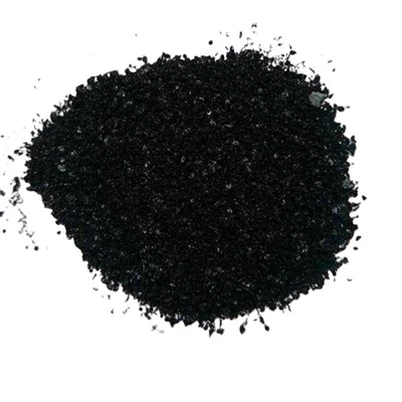
Sulfur Blue BRN (C.I. Sulfur Blue 7)
1. Basic Information · Product Name: Sulfur Blue BRN (also known as Sulphur Blue BRN, Sulfur Navy Blue) · Colour Index: C.I. Sulfur Blue 7 · Chemical Class: Sulfur dye (a complex organic compound containing sulfur linkages) · Physical Form: Typically a dark blue-grey...
Description
1. Basic Information
· Product Name: Sulfur Blue BRN (also known as Sulphur Blue BRN, Sulfur Navy Blue)
· Colour Index: C.I. Sulfur Blue 7
· Chemical Class: Sulfur dye (a complex organic compound containing sulfur linkages)
· Physical Form: Typically a dark blue-grey to blackish-blue powder or granules.
· Primary Substrate: Cellulosic fibers (especially cotton, linen, viscose/rayon). Also applicable to vinal (polyvinyl alcohol fiber).
2. Key Characteristics & Performance
Advantages:
1. Cost-Effectiveness: One of the most economical blue dyes available, offering a low cost per kg and low dyeing cost.
2. Good Build-up & Coverage: Excellent affinity for cellulose, providing deep and level shades with good coverage of immature cotton.
3. Good Wet Fastness: Generally exhibits good to excellent wash fastness and wet rubbing fastness, making it suitable for heavy-duty fabrics.
4. Mature Technology: Well-established, simple dyeing process widely used in industry.
5. Classic Color: Imparts a characteristic navy blue, deep blue, or dull blue shade, which is traditional for certain applications like denim.
Disadvantages & Considerations:
1. Limited Color Brilliance: Colors are dull and lack the brightness of vat, reactive, or direct dyes. The hue often has a reddish or greenish cast.
2. Moderate Lightfastness: Lightfastness is generally moderate to poor. Prolonged exposure to sunlight can cause significant fading. This is a common weakness of sulfur dyes.
3. Potential for Tenderizing (Storage Tenderness): Fabrics dyed with some sulfur dyes (less common with Sulfur Blue than with Sulfur Black) can become tender (weakened) during storage under warm, humid conditions due to acid liberation from oxidation of residual sulfur. Proper after-treatment can mitigate this.
4. Environmental & Safety Concerns:
· Dyeing Process: Requires a strongly alkaline reducing bath using Sodium Sulfide (Na₂S) and Sodium Hydroxide (NaOH), which poses handling hazards and increases the chemical load in effluent.
· AOX Content: Some conventional sulfur dyes may contain or generate Adsorbable Organic Halides (AOX) during production, which may not comply with stringent ecological standards (e.g., OEKO-TEX®).
· Heavy Metals: May contain trace amounts of heavy metals (e.g., copper) as impurities.
5. Limited Color Range: Primarily suitable for deep shades like blues, blacks, browns, and greens.
3. Dyeing Process (Key Steps)
Sulfur dyes are water-insoluble and must be chemically reduced to a soluble form for application.
1. Reduction / Dissolution: The dye is dissolved in a hot bath (80-95°C) containing Sodium Sulfide (reducing agent) and Sodium Hydroxide (alkali). This converts the dye into its soluble leuco form (usually a yellowish or greenish solution).
2. Dyeing: The fabric is immersed in the reduced dye bath. The leuco compound is absorbed by the cellulose fibers.
3. Oxidation / Fixation: After dyeing, the fabric is exposed to air or treated with an oxidizing agent (e.g., hydrogen peroxide, sodium bromate). This re-oxidizes the leuco compound inside the fiber, converting it back to the insoluble, fixed pigment form, developing the final blue color.
4. After-Treatment: Includes thorough rinsing, soaping (to remove surface dye and improve fastness), and possibly anti-tenderizing treatment (e.g., with urea or sodium acetate) to neutralize any potential acid formation.
4. Main Applications
1. Apparel Fabrics: The primary use is in Denim (Jeans) for a classic, vintage, or workwear look. Also used for workwear, uniforms, jackets, and casual bottoms.
2. Home Textiles & Heavy Fabrics: Curtains, canvas, upholstery fabrics, and tentage.
3. Industrial Textiles: Where dark shades and good wet fastness are required.
5. Market & Eco-Alternatives
Due to environmental regulations, improved versions are available:
· Eco-compliant Sulfur Dyes: Purified to minimize AOX and heavy metal content, meeting standards like OEKO-TEX®.
· Liquid Sulfur Dyes: Pre-reduced liquid forms. They offer easier handling, less dust, more consistent results, and reduced sulfide consumption, but at a higher cost.
Sulfur Blue BRN and Sulfur Black are the two most important products in the sulfur dye family. They share the same core application principles and pros/cons, differing mainly in hue.
Summary
Sulfur Blue BRN is a cost-effective and robust dye for achieving deep navy blues on cellulose. Its strong wet fastness and low cost make it a staple for denim and heavy cotton fabrics. However, its moderate lightfastness, dull shade, and environmental profile are key limitations. Selection depends on end-use requirements, cost targets, and ecological standards. Proper dyeing and after-treatment are crucial for optimal performance and durability.
Hot Tags: sulfur blue brn (c.i. sulfur blue 7), China sulfur blue brn (c.i. sulfur blue 7) manufacturers, suppliers, factory, sulphur dyes for jet dyeing, sulphur dyes for mercerized fabrics, sulphur dyes for optical fibers, sulphur dyes for tie dyeing, sulphur dyes for heat transfer printing, sulphur dyes for desized textiles
Send Inquiry
You Might Also Like