Detailed Explanation Of All Types Of Textile Dyes
Leave a message
I. Sulfur Dyes
Sulfur dyes are the main dye for cotton fabric, with low cost and excellent durability. They are mainly in dark colors such as black, brown, and navy blue. They are resistant to washing and wear, have a large application range, and are widely used in jeans, workwear, and cotton and linen fabrics.
- Advantages: Affordable price, excellent washing durability, mature technology
- Applicable to: Cotton, viscose, etc. cellulose fibers
- Characteristics: Reversible dyeing, mainly dark colors
II. Solvent Dyes
Solvent dyes can be dissolved in organic solvents and do not dissolve in water. They are used for coloring in non-aqueous systems and have good transparency and bright colors.
- Application: Plastics, inks, coatings, leather finishing, stationery
- Advantages: High transparency, good dispersion, good resistance to migration
III. Basic Dyes (Alkaline Dyes)
Cationic water-soluble dyes with strong coloring power and bright colors, used for acrylic fibers.
- Applicable to: Acrylic, modified polyester, paper, bamboo and wood
- Characteristics: Fast coloring, high vividness, moderate cost
IV. Cationic Dyes
Cationic dyes specially designed for acrylic fibers, with good leveling and high color fastness.
- Applicable to: Acrylic, blended fabrics
- Advantages: Complete color spectrum, excellent color fastness, suitable for high-end fabrics
V. Liquid Dyes
Pre-dispersed liquid form, precise measurement, fast dissolution, no dust, suitable for automated dyeing.
- Advantages: Environmentally friendly, dust-free, precise measurement, high stability
- Applicable to: Textile, papermaking, leather automated production lines
VI. Tank Dyes (Immersion / Conveyance Dyeing Special)
Suitable for tank cylinders, conveyance, and continuous dyeing equipment, with strong penetration and stable leveling.
- Applicable to: Continuous dyeing of cotton, linen, chemical fibers
- Characteristics: Uniform dyeing, suitable for large-scale continuous production
VII. Direct Dyes
No mordanting required, directly dyeing cellulose fibers, the process is the simplest.
- Applicable to: Cotton, linen, viscose, paper
- Advantages: Simple operation, low cost, complete color spectrum
VIII. Acid Dyes
Molecules contain acidic groups, dyeing in an acidic bath, used for protein fibers and nylon.
- Applicable to: Wool, silk, nylon, leather
- Classification: Strong acid, weak acid, acid medium, acid complex
- Characteristics: Bright color, good leveling
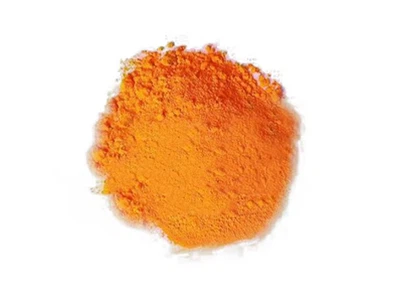
IX. Solvent Orange
High-performance solvent dyes, pure orange color, good heat resistance and migration resistance, mostly used for plastic and ink.
- Application: Plastic coloring, ink, coatings, stationery
- Advantages: Excellent heat resistance, color stability, wide applicability