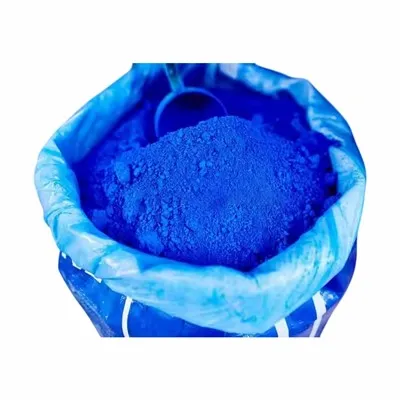
What is the dyeing time required for Vat Blue Vb?
Leave a message

What is the Dyeing Time Required for Vat Blue VB?
As a supplier of Vat Blue VB, I've encountered numerous inquiries from customers regarding the dyeing time required for this particular vat dye. Understanding the appropriate dyeing time is crucial for achieving optimal color results, ensuring color fastness, and maintaining the efficiency of the dyeing process. In this blog post, I'll delve into the factors that influence the dyeing time of Vat Blue VB and provide some general guidelines to help you navigate this aspect of the dyeing process.
Factors Affecting Dyeing Time
- Fiber Type
Different fibers have varying affinities for Vat Blue VB, which directly impacts the dyeing time. For example, cotton, a natural cellulose fiber, has a porous structure that allows the dye molecules to penetrate relatively easily. However, the dyeing time can still be influenced by the cotton's quality, such as its degree of mercerization. Mercerized cotton has a more uniform and smoother surface, which can sometimes reduce the dyeing time as it provides better access for the dye.
On the other hand, synthetic fibers like polyester have a more compact and hydrophobic structure. Vat Blue VB does not have a natural affinity for polyester, so when dyeing polyester blends or attempting to dye polyester directly (which may require special techniques), the dyeing time can be significantly longer. The dye needs to penetrate through the dense fiber structure, and auxiliary agents are often required to enhance the dye uptake.
- Dye Concentration
The concentration of Vat Blue VB in the dye bath plays a significant role in determining the dyeing time. A higher dye concentration generally means there are more dye molecules available to interact with the fibers. This can lead to a faster initial dye uptake, but it doesn't necessarily mean the dyeing process will be completed in a shorter time. At higher concentrations, the dye molecules may also tend to aggregate, which can slow down the diffusion of the dye into the fibers.
Conversely, a lower dye concentration may require a longer dyeing time to achieve the desired color depth. However, it can also result in more even dyeing as there is less chance of dye aggregation.
- Dyeing Temperature
Temperature is a critical factor in the dyeing process. For Vat Blue VB, increasing the temperature can accelerate the diffusion of the dye molecules into the fibers. Higher temperatures provide more kinetic energy to the dye molecules, allowing them to move more freely and penetrate the fiber structure more quickly.
However, there is an upper limit to the temperature that can be used. Excessive heat can cause damage to the fibers, change the chemical properties of the dye, or lead to uneven dyeing. Typically, the dyeing temperature for Vat Blue VB on cotton ranges from 60 - 90°C, but the exact temperature will depend on the specific dyeing recipe and the desired results.
- Auxiliary Agents
The use of auxiliary agents in the dye bath can greatly affect the dyeing time. For example, reducing agents are essential for vat dyes like Vat Blue VB. These agents convert the insoluble vat dye into a soluble leuco form, which can then be absorbed by the fibers. The type and concentration of the reducing agent can influence how quickly the dye is converted and taken up by the fibers.
Salt is another common auxiliary agent used in dyeing, especially for cotton. It helps to promote the adsorption of the dye onto the fibers by reducing the negative charge on the fiber surface. The addition of the right amount of salt can significantly reduce the dyeing time.
General Dyeing Time Guidelines
Based on my experience as a Vat Blue VB supplier and industry best practices, here are some general guidelines for the dyeing time:
-
Cotton Dyeing: When dyeing cotton with Vat Blue VB at a temperature of 60 - 90°C and a moderate dye concentration (around 1 - 3% on the weight of the fabric), the dyeing time typically ranges from 30 - 60 minutes. This time allows the dye to penetrate the cotton fibers and achieve a good color depth. However, if a deeper color is required or if the cotton has a high degree of compactness, the dyeing time may need to be extended up to 90 minutes.
-
Blended Fabrics: For blended fabrics, such as cotton-polyester blends, the dyeing time can be more complex to determine. Since each fiber has different dyeing characteristics, the dyeing process may involve multiple steps or a compromise in the dyeing conditions. In general, the dyeing time for cotton-polyester blends can range from 45 - 90 minutes, depending on the blend ratio and the desired color.
It's important to note that these are just general guidelines, and the actual dyeing time may need to be adjusted based on the specific requirements of the dyeing process.
Comparing with Other Vat Dyes
It's interesting to compare the dyeing time of Vat Blue VB with other vat dyes in our product range, such as Vat Yellow Gcn, Vat Grey M, and Vat Green Ffb.
Vat Yellow Gcn, for example, may have a slightly different dyeing time due to its chemical structure and affinity for fibers. In some cases, it may require a slightly lower dyeing temperature and a longer time to achieve a uniform color, especially on certain types of fibers.


Vat Grey M and Vat Green Ffb also have their unique dyeing characteristics. Vat Grey M is known for its good coverage and colorfastness, and its dyeing time may be similar to Vat Blue VB on cotton, but can vary on other fibers. Vat Green Ffb, on the other hand, may require more precise control of the dyeing conditions, including temperature and dye concentration, to achieve the desired shade, which can also impact the dyeing time.
Importance of Testing
Before starting a large-scale dyeing operation, it's highly recommended to conduct small-scale tests. These tests allow you to determine the optimal dyeing time for your specific fibers, dye concentrations, and equipment. You can experiment with different combinations of temperature, dye concentration, and auxiliary agents to find the best parameters for achieving the desired color and color fastness.
By conducting tests, you can also minimize the risk of costly mistakes and ensure a more consistent and high-quality dyeing process.
Contact for Procurement
If you're interested in purchasing Vat Blue VB or have any further questions about the dyeing process, I invite you to contact me for a discussion. We have a team of experts who can provide you with detailed technical support and help you optimize your dyeing process. Whether you're a small textile workshop or a large-scale manufacturer, we're committed to meeting your needs and providing you with the highest quality Vat Blue VB.
References
- "Textile Dyeing and Finishing" by Cheryl A. Salisbury
- "Advanced Textile Chemistry" by Ali A. MacDiarmid