What are the reaction conditions for Acid Red 87 synthesis?
Leave a message

Acid Red 87, also known as Eosin Y, is a synthetic organic compound that belongs to the xanthene dye family. It is widely used in various fields, including biological staining, textile dyeing, and cosmetics. As a leading supplier of Acid Red 87, we often receive inquiries about the reaction conditions for its synthesis. In this blog post, we will delve into the details of the synthesis process and the key reaction conditions involved.
Chemical Structure and Properties of Acid Red 87
Before discussing the synthesis reaction conditions, it's essential to understand the chemical structure and properties of Acid Red 87. Its chemical formula is C₂₀H₆Br₄Na₂O₅, and it has a characteristic red color. Acid Red 87 is soluble in water and alcohol, and it exhibits good stability under normal storage conditions. The dye has a high affinity for proteins and is commonly used to stain cytoplasm in biological samples, making it a valuable tool in microscopy.
Synthesis Pathway of Acid Red 87
The synthesis of Acid Red 87 typically involves a multi - step process. The general starting materials include resorcinol, phthalic anhydride, and bromine. Here is a step - by - step overview of the synthesis process:
Step 1: Formation of Fluorescein
The first step is the condensation reaction between resorcinol and phthalic anhydride. This reaction is carried out in the presence of a catalyst, usually concentrated sulfuric acid. The reaction equation is as follows:
[C_6H_4(CO)2O + 2C_6H_4(OH)2 \xrightarrow{H_2SO_4} C{20}H{12}O_5+ H_2O]

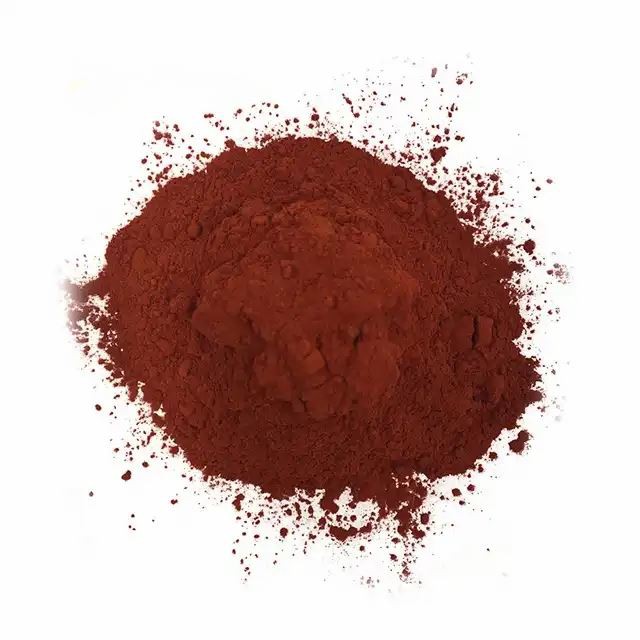
The reaction conditions for this step are crucial. The temperature is typically maintained at around 180 - 200°C. At this temperature range, the reaction proceeds at a reasonable rate, and the yield of fluorescein is relatively high. The concentrated sulfuric acid not only acts as a catalyst but also helps to dehydrate the reaction mixture, driving the equilibrium towards the formation of fluorescein. The reaction time usually ranges from 2 - 4 hours, depending on the scale of the reaction and the purity of the starting materials.
Step 2: Bromination of Fluorescein
After the formation of fluorescein, the next step is bromination. Bromine is added to the fluorescein solution in an appropriate solvent, such as glacial acetic acid. The reaction equation is:
[C_{20}H_{12}O_5+ 4Br_2 \rightarrow C_{20}H_8Br_4O_5+ 4HBr]
The bromination reaction is exothermic, so the temperature needs to be carefully controlled. Usually, the reaction starts at a relatively low temperature, around 0 - 5°C, to avoid over - bromination and side reactions. As the reaction progresses, the temperature can be gradually increased to room temperature. The reaction time for bromination is typically several hours, and the reaction is monitored by thin - layer chromatography (TLC) to ensure complete conversion of fluorescein to the tetrabromo derivative.
Step 3: Neutralization and Salt Formation
The final step is the neutralization of the brominated product with sodium hydroxide. This step converts the brominated xanthene derivative into the sodium salt, which is Acid Red 87. The reaction equation is:
[C_{20}H_8Br_4O_5+ 2NaOH \rightarrow C_{20}H_6Br_4Na_2O_5+ 2H_2O]
The neutralization reaction is carried out at room temperature. The pH of the reaction mixture is carefully adjusted to around 7 - 8 to ensure the formation of the stable sodium salt. After neutralization, the product is isolated by filtration, washed with water, and dried to obtain pure Acid Red 87.
Influence of Reaction Conditions on Yield and Quality
The reaction conditions have a significant impact on the yield and quality of Acid Red 87.
Temperature
As mentioned above, temperature plays a crucial role in each step of the synthesis. In the condensation reaction to form fluorescein, a high temperature is required to break the chemical bonds and promote the reaction. However, if the temperature is too high, side reactions may occur, such as the decomposition of starting materials or the formation of unwanted by - products. In the bromination step, a low initial temperature is necessary to control the reaction rate and selectivity. Higher temperatures during bromination can lead to over - bromination, resulting in a product with a different chemical structure and lower quality.
Catalyst and Solvent
The choice of catalyst and solvent is also important. In the condensation reaction, concentrated sulfuric acid is an effective catalyst, but it needs to be used in the right amount. Too much sulfuric acid can cause charring of the starting materials, while too little may result in a slow reaction rate. In the bromination step, glacial acetic acid is a suitable solvent because it can dissolve both fluorescein and bromine, and it also helps to control the reaction rate.
Reaction Time
The reaction time affects the conversion of starting materials and the formation of the final product. Incomplete reaction due to a short reaction time may lead to a low yield, while an overly long reaction time may cause degradation of the product or the formation of side products. Therefore, it is necessary to optimize the reaction time based on the reaction conditions and the monitoring of the reaction progress.
Comparison with Other Acid Dyes
Acid Red 87 is just one of many acid dyes available in the market. Other well - known acid dyes include Acid Red 92, Acid Blue 7, and Acid Blue 9. Each of these dyes has its own unique synthesis process and reaction conditions.
For example, Acid Red 92 is synthesized through a different set of reactions involving diazotization and coupling reactions. The reaction conditions for Acid Red 92 synthesis are quite different from those of Acid Red 87, including the choice of starting materials, catalysts, and reaction temperatures. Acid Blue 7 and Acid Blue 9 also have their own distinct synthesis pathways, which are tailored to their specific chemical structures and properties.
Applications of Acid Red 87
Acid Red 87 has a wide range of applications. In the biological field, it is used as a counter - stain in histological and cytological preparations. It can stain cytoplasm pink, making it easier to distinguish different cell components under a microscope. In the textile industry, Acid Red 87 is used to dye natural and synthetic fibers, providing a bright and stable red color. It is also used in cosmetics, such as lipsticks and nail polishes, to add color.
Conclusion
In conclusion, the synthesis of Acid Red 87 involves a multi - step process with specific reaction conditions for each step. Temperature, catalyst, solvent, and reaction time are all critical factors that affect the yield and quality of the final product. As a supplier of Acid Red 87, we have extensive experience in optimizing these reaction conditions to ensure the production of high - quality Acid Red 87.
If you are interested in purchasing Acid Red 87 for your specific application, we welcome you to contact us for further discussion. Our team of experts can provide you with detailed product information, technical support, and customized solutions to meet your needs.
References
- "Advanced Organic Chemistry" by Jerry March
- "Dye Chemistry" by K. Venkataraman
- Journal articles on the synthesis of xanthene dyes