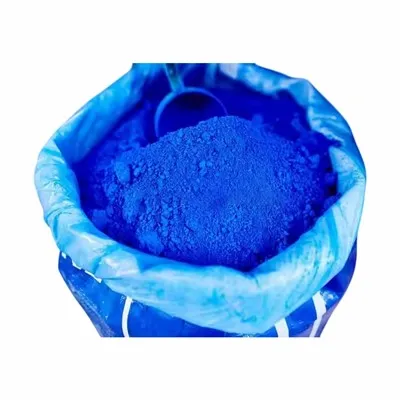
What are the ion - exchange properties of cationic dyes?
Leave a message

Yo, fellow dye enthusiasts! I'm stoked to be here as a supplier of cationic dyes to talk about one of the most interesting aspects of these vibrant colorants: their ion - exchange properties.

First off, let's get a quick rundown of what cationic dyes are. Cationic dyes are basically positively charged dyes. They're super popular in the textile industry, especially for dyeing acrylic fibers. You know those bright, eye - catching colors on your favorite acrylic sweaters or sportswear? Chances are, cationic dyes were used to achieve that look.
Now, let's dive into the ion - exchange properties. Ion exchange is all about the swapping of ions between a solid and a liquid. In the case of cationic dyes, this usually happens when the dye is in contact with a fiber or a substrate. The positive charge on the cationic dye molecules allows them to interact with negatively charged sites on the fiber surface. It's like a little dance where the dye cations replace other cations that are already attached to the fiber.
For example, when we're dyeing acrylic fibers, the fiber has a lot of anionic groups on its surface. These anionic groups attract the cationic dye molecules. The dye cations will then exchange places with the sodium or other cations that are initially bound to the anionic sites on the fiber. This exchange is driven by the electrostatic attraction between the positive dye ions and the negative fiber sites.
One of the key factors that affect the ion - exchange process of cationic dyes is the pH of the dye bath. In general, a slightly acidic to neutral pH is ideal for most cationic dyeing processes. At a lower pH, the anionic groups on the fiber are more protonated, which means they have a stronger negative charge. This enhances the electrostatic attraction between the fiber and the cationic dye, leading to better dye uptake. However, if the pH is too low, it can cause some problems. For instance, it might damage the fiber or cause the dye to aggregate, which can result in uneven dyeing.
Another important factor is the temperature. Higher temperatures usually speed up the ion - exchange process. When we increase the temperature, the kinetic energy of the dye molecules increases. This makes it easier for the dye cations to move around and reach the anionic sites on the fiber. But again, there's a limit. If the temperature is too high, it can damage the fiber and also cause the dye to degrade.
The concentration of the dye in the bath also plays a crucial role. A higher dye concentration means there are more dye cations available for ion exchange. This can lead to a deeper and more intense color on the fiber. However, if the concentration is too high, it can cause problems like dye precipitation or poor color fastness.
Let's talk about some of the benefits of the ion - exchange properties of cationic dyes. One of the biggest advantages is the excellent color fastness. Once the cationic dye has exchanged ions with the fiber, it forms a strong bond with the fiber. This means that the color is less likely to fade or bleed when the dyed fabric is washed, exposed to sunlight, or rubbed against other surfaces.
Cationic dyes also offer a wide range of brilliant colors. Whether you're looking for a vivid red, a bright yellow, or a deep blue, there's a cationic dye that can do the job. For example, Cationic Violet 16 is a popular choice for achieving a beautiful violet shade. It has great ion - exchange properties, which allow it to bond well with the fiber and give a long - lasting color.
However, there are also some challenges. One of the main issues is the potential for environmental pollution. The dyeing process often involves the use of chemicals and generates wastewater. The cationic dyes in the wastewater can be difficult to remove, and if not properly treated, they can cause harm to the environment. As a responsible supplier, we're constantly working on developing more eco - friendly dyeing processes and products.
We're also researching ways to improve the ion - exchange efficiency of our cationic dyes. For example, we're looking into using new additives that can enhance the electrostatic interaction between the dye and the fiber. These additives can help reduce the amount of dye needed in the bath, which not only saves costs but also reduces the environmental impact.
In the world of fashion and textiles, the demand for high - quality, colorful fabrics is always on the rise. And cationic dyes, with their unique ion - exchange properties, are well - positioned to meet this demand. Whether it's for creating trendy clothing, home textiles, or industrial fabrics, cationic dyes can provide the vibrant colors and excellent color fastness that customers are looking for.
If you're in the textile industry and are interested in using our cationic dyes, we'd love to have a chat with you. We can discuss your specific requirements, whether it's the type of fiber you're dyeing, the color you want to achieve, or the environmental standards you need to meet. Our team of experts is always ready to offer you the best solutions and support. Don't hesitate to reach out and start a conversation about how we can work together to create amazing, colorful products.
References
- Zollinger, H. (2003). Color Chemistry: Synthesis, Properties, and Applications of Organic Dyes and Pigments. Wiley - VCH.
- Lewis, D. M. (Ed.). (2001). The Chemistry of Synthetic Dyes. Academic Press.