Can Vat Blue Rsn be used in natural fiber blends dyeing?
Leave a message

Hey there! As a supplier of Vat Blue Rsn, I often get asked if this dye can be used for natural fiber blends dyeing. So, let's dive right into it and explore the ins and outs of using Vat Blue Rsn in this context.
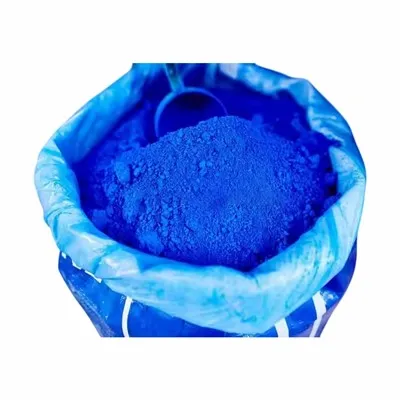
First off, let's understand what Vat Blue Rsn is. Vat Blue Rsn is a well - known vat dye. You can find more details about it on our website Vat Blue Rsn. Vat dyes are a class of dyes that are insoluble in water in their original form. They need to be reduced to a soluble leuco form in an alkaline solution before they can be applied to fibers. Once applied, they are then oxidized back to their insoluble form within the fiber, which gives them excellent color fastness properties.
Now, when it comes to natural fiber blends, these are combinations of different natural fibers like cotton, linen, silk, and wool. Each of these fibers has its own unique characteristics, and these characteristics can affect how well Vat Blue Rsn works on them.


Let's start with cotton - based blends. Cotton is one of the most common natural fibers used in blends. It has a high affinity for vat dyes like Vat Blue Rsn. The cellulose structure of cotton provides a good substrate for the dye molecules to attach to. When dyeing cotton blends, Vat Blue Rsn can penetrate the cotton fibers easily during the dyeing process. The reduced leuco form of the dye can diffuse into the cotton fibers, and after oxidation, it forms a strong bond with the cellulose. This results in a deep, rich color and good color fastness, especially to washing and light.
For example, if you have a cotton - linen blend, linen also has a cellulose structure similar to cotton. So, Vat Blue Rsn can work well on this blend too. The dyeing process for such blends is quite similar to that of pure cotton. However, since linen has a more crystalline structure compared to cotton, it might take a bit longer for the dye to penetrate fully. But with the right dyeing conditions, like adjusting the temperature and dyeing time, you can achieve a uniform color on the blend.
Silk - cotton blends are another popular option. Silk is a protein fiber, and it has different dyeing characteristics compared to cotton. Vat Blue Rsn has a lower affinity for silk compared to cotton. But in a blend, the cotton part will still take up the dye well. To get a good result on silk - cotton blends, you might need to use a two - step dyeing process. First, you can dye the cotton part with Vat Blue Rsn using the standard vat dyeing method. Then, you can use a different dyeing approach for the silk part to enhance its color. This way, you can balance the color on the blend and get an aesthetically pleasing result.
Wool - based blends are a bit more challenging. Wool is also a protein fiber, and it has a complex structure with scales on its surface. Vat Blue Rsn doesn't have a natural affinity for wool. However, if you want to use it on a wool - cotton blend, you can focus on dyeing the cotton part first. You need to be careful during the dyeing process to avoid damaging the wool. The alkaline conditions required for vat dyeing can be harsh on wool. So, you might need to use a milder reducing agent and control the pH carefully.
Now, let's talk about the advantages of using Vat Blue Rsn in natural fiber blends dyeing. One of the biggest advantages is its color fastness. As mentioned earlier, once the dye is fixed in the fibers, it has excellent resistance to washing, light, and rubbing. This means that the dyed blends will maintain their color for a long time, even after multiple washes. This is especially important for products like clothing and home textiles that are used frequently.
Another advantage is the wide range of shades that can be achieved. Vat Blue Rsn can produce different shades of blue, from light pastel blues to deep navy blues. You can also mix it with other vat dyes like Vat Green Ffb or Vat Grey M to create unique color combinations on the natural fiber blends.
However, there are also some challenges. The dyeing process for vat dyes is more complex compared to some other types of dyes. It requires the use of reducing agents and alkaline solutions, which need to be handled carefully. There are also environmental concerns associated with the use of reducing agents and the disposal of dyeing waste. But with proper waste management and the use of more eco - friendly reducing agents, these issues can be mitigated.
In conclusion, Vat Blue Rsn can be used in natural fiber blends dyeing, but it requires careful consideration of the fiber types in the blend. Different blends have different dyeing requirements, and you need to adjust the dyeing process accordingly. With the right knowledge and techniques, you can achieve great results in terms of color and color fastness.
If you're interested in using Vat Blue Rsn for your natural fiber blends dyeing projects, I'd love to have a chat with you. Whether you have questions about the dyeing process, need advice on specific blends, or want to place an order, don't hesitate to reach out. We can discuss your requirements in detail and find the best solution for your dyeing needs.
References
- "Textile Dyeing and Finishing" by Lewis, M.
- "Handbook of Natural Fibers" by Kozlowski, R.