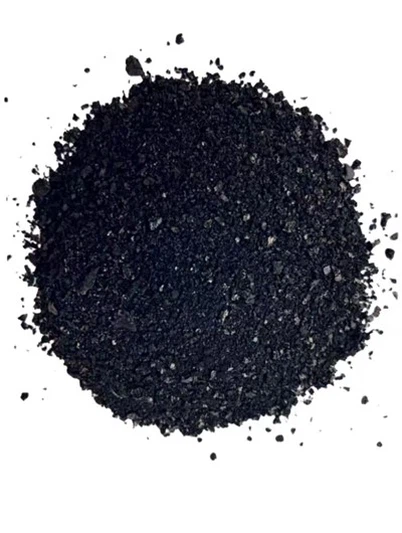
The Industrial Applications Of Sulfur Black
Leave a message
The industrial use of Sulfur Black is extensive, primarily concentrated in the textile industry, but it also extends to fields such as leather and paper manufacturing.
Main Industrial Application Areas
1. Textile Industry (Core Application) This is the largest volume application for Sulfur Black, mainly used for dyeing cellulose fibers:
· Cotton: Used for dyeing yarn, knitted fabric, and woven fabric (such as corduroy and poplin). It is particularly important for denim production, where Sulfur Black is the second most significant dye after indigo for manufacturing black jeans and workwear.
· Linen: Applied in dyeing linen or ramie fabrics.
· Viscose: Used for dyeing rayon fabrics to achieve a deep, jet-black shade.
· Vinylon: Employed in dyeing vinylon fibers, often combined with other dyes like Sulfur Black CLG to achieve a pure black color.
2. Leather Industry Water-soluble Sulfur Black is widely used for leather dyeing, especially for chrome-tanned leather. It imparts a uniform, deep black color to the leather and offers good light fastness.
3. Paper Industry Used in the production of specialty colored paper, packaging paper, or paperboards. Sulfur Black provides a strong and lasting black color to the paper.
Application Characteristics by Product Form
Different physical forms of Sulfur Black are suited for various industrial equipment and processes:
· Regular Powder/Flake
· Characteristics: Insoluble in water, requires dissolution with a reducing agent like sodium sulfide.
· Application: Suitable for traditional exhaust dyeing and jig dyeing processes. For example, dyeing cotton yarn in dyeing baths or dyeing cotton fabric on jiggers. This is the most traditional and widely used form.
· Solubilized Powder
· Characteristics: Directly soluble in water, easy to use, and offers good penetration.
· Application: Ideal for continuous pad-dyeing processes for large-scale, high-efficiency dyeing of cotton and viscose fabrics. This form is also the preferred choice for leather and paper dyeing.
· Liquid Sulfur Black (Pre-reduced)
· Characteristics: Supplied as a ready-to-use liquid, pre-reduced, with high purity, few impurities, good stability, and minimal odor.
· Application: Represents the modern, eco-friendly direction. It is particularly suitable for slasher dyeing of denim warp yarns and is also widely used for dyeing knitted fabrics and package dyeing. It generates less wastewater and offers higher color fastness.
Key Process Control Points
Regardless of the form, Sulfur Black dyeing follows the basic process of Reduction → Absorption → Oxidation → Aftertreatment.
· Reduction and Absorption: The dye is converted into a leuco form (which has an affinity for the fiber) by a reducing agent and is absorbed by the cellulose. Liquid forms offer better control over this process due to their stability.
· Oxidation for Color Development: The absorbed dye is oxidized by air or an oxidizing agent, converting it back to its insoluble form and locking the color into the fiber.
· Tendering Prevention: The sulfur in the dye can oxidize during storage, forming sulfuric acid that can weaken (tender) the fiber. Industrial measures are essential:
· Thorough Washing: To remove residual sulfur and alkali from the fiber.
· Anti-tendering Aftertreatment: Treating the fabric with anti-tendering agents like urea, sodium acetate, or trisodium phosphate.
· Using Non-tendering Types: Directly using specially stabilized Non-tendering Sulfur Black dyes to fundamentally solve the problem.
· Environmental Considerations: Traditional methods using sodium sulfide generate high-sulfur wastewater. Consequently, industrial applications are increasingly shifting towards liquid Sulfur Black and eco-friendly reducing agents like glucose to reduce the environmental load.