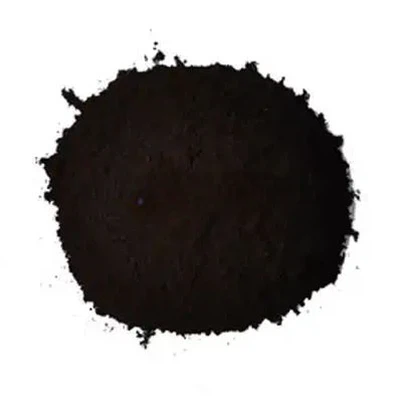
The water solubility of Sulfur Black
Leave a message
The water solubility of Sulfur Black is mainly affected by four core factors: its own chemical structure, preparation process, external modification methods, and application environmental conditions. As a type of sulfur dye, it has poor inherent water solubility and requires specific treatment to improve water solubility for practical application.
In terms of chemical structure, the molecular backbone of Sulfur Black is centered on aromatic rings connected by sulfur bonds to form macromolecular structures, which lack strong hydrophilic groups inherently, leading to weak basic water solubility. The higher the crosslinking degree of molecular chains and the larger the molecular weight, the worse the water solubility will be. A small amount of residual intermediates with hydrophilic groups during preparation can slightly enhance its water solubility, but the overall impact is limited.
The preparation process is a key factor determining the water solubility of Sulfur Black, with the core lying in the control of vulcanization reaction. The dosage of sulfur, reaction temperature and time during vulcanization directly affect the quantity and crosslinking degree of sulfur bonds. Excessive sulfur, excessively high reaction temperature or prolonged reaction time will result in tighter molecular crosslinking and significant decrease of water solubility. Meanwhile, the post-preparation drying process also exerts an influence: high-temperature drying tends to cause molecular agglomeration, which reduces the dispersibility during subsequent dissolution and indirectly affects the water solubility effect.
External modification is an effective way to directly change the water solubility of Sulfur Black, which is also the main industrial method to improve its water solubility. The common one is reduction treatment, using reducing agents such as sodium hydrosulfite to reduce the sulfur bonds in Sulfur Black molecules into hydrophilic groups like mercapto groups, converting it into water-soluble leuco form to meet the requirements of dyeing application. In addition, surfactant modification and sulfonation modification can introduce hydrophilic components on the molecular surface to improve its dispersion and dissolution capacity in water, while the unmodified raw Sulfur Black powder is almost insoluble in water.
The environmental conditions during application will influence the actual water solubility performance. First is the pH value of water quality: the reduced leuco form of Sulfur Black is more stable and has better water solubility in alkaline environment, while acidic environment is prone to cause oxidation and precipitation of leuco form, thus reducing water solubility. Second is water temperature: appropriately increasing water temperature can accelerate the dispersion of Sulfur Black particles and assist in improving dissolution efficiency, but excessively high temperature will speed up the decomposition of reducing agents and instead affect the stability of water solubility. Besides, the electrolyte content in water also matters, as calcium and magnesium ions in hard water will combine with Sulfur Black leuco form to form precipitates, further reducing its water solubility and dispersibility.
In addition, the particle size of Sulfur Black has an auxiliary effect. The finer the particles are ground, the larger the specific surface area will be, which increases the contact area with water and speeds up the dissolution rate, but this only affects the dissolution efficiency without changing the upper limit of its inherent water solubility.ground, the larger the specific surface area will be, which increases the contact area with water and speeds up the dissolution rate, but this only affects the dissolution efficiency without changing the upper limit of its inherent water solubility.