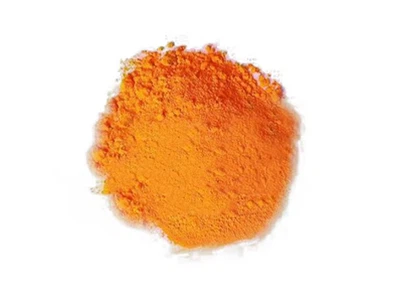
What is the solubility of Direct Red Me?
Leave a message

Hey there! I'm a supplier of Direct Red Me, and today I want to chat about one of the most common questions I get: What is the solubility of Direct Red Me?
First off, let's understand what solubility means in the context of dyes. Solubility refers to the ability of a substance (in this case, Direct Red Me) to dissolve in a particular solvent, usually water in the dyeing industry. It's a crucial property because it determines how well the dye can be dispersed and applied to the material we're looking to color.
Factors Affecting the Solubility of Direct Red Me
There are several factors that can influence the solubility of Direct Red Me. Temperature is a big one. Generally, as the temperature of the solvent (water) increases, the solubility of Direct Red Me also goes up. This is because higher temperatures provide more energy to the dye molecules, allowing them to break free from their solid state and mix more easily with the water molecules.
For example, at room temperature (around 20 - 25°C), Direct Red Me might have a certain solubility level. But if we heat the water to 60 - 80°C, we'll likely see a significant increase in how much of the dye can dissolve. This is why in many dyeing processes, the water is heated to optimize the dye's solubility and ensure an even color distribution on the fabric.
Another factor is the pH of the solution. Direct Red Me, like many other dyes, can have different solubility characteristics depending on whether the solution is acidic, neutral, or alkaline. In some cases, a slightly alkaline solution might enhance the solubility of Direct Red Me, while in others, an acidic environment could be more favorable. It really depends on the specific chemical structure of the dye.
The presence of other chemicals in the solution can also impact solubility. For instance, salts can sometimes either increase or decrease the solubility of Direct Red Me. Some salts might interact with the dye molecules and cause them to clump together, reducing solubility. On the other hand, certain salts can help break down the dye aggregates and improve its dispersion in the water.
Measuring the Solubility of Direct Red Me
To measure the solubility of Direct Red Me, we typically use a simple experiment. We take a known amount of water and gradually add the dye while stirring continuously. We keep adding the dye until no more can dissolve, and we start to see some undissolved particles at the bottom of the container. The amount of dye that has dissolved at this point gives us an idea of the solubility under the specific conditions (temperature, pH, etc.) of the experiment.
It's important to note that solubility is usually expressed in terms of grams of dye per liter of solvent (g/L). So, if we find that 10 grams of Direct Red Me can dissolve in 1 liter of water at a certain temperature and pH, we say the solubility is 10 g/L.
Comparing with Other Direct Dyes
When it comes to solubility, Direct Red Me is comparable to other direct dyes in some ways, but also has its unique characteristics. For example, Direct Brown Gtl might have a different solubility profile due to its distinct chemical structure. Some direct dyes are more soluble in cold water, while others require higher temperatures to dissolve effectively.
Direct Black Ef is another dye that we often compare with Direct Red Me. In some applications, the solubility of Direct Black Ef might be more important, depending on the specific dyeing process and the type of fabric being used. Similarly, Direct Yellow 2gl has its own solubility properties that can vary from Direct Red Me.


Practical Applications of Solubility Knowledge
Understanding the solubility of Direct Red Me is crucial for various practical applications. In the textile industry, for example, it helps in formulating the right dyeing recipes. If we know the solubility of the dye at different temperatures and pH levels, we can ensure that we're using the optimal conditions to achieve the desired color intensity and uniformity on the fabric.
In the paper industry, solubility also plays a key role. Direct Red Me can be used to color paper products, and the solubility of the dye affects how well it can be incorporated into the paper pulp. A higher solubility means better dispersion and a more even color throughout the paper.
Why Choose Our Direct Red Me?
As a supplier of Direct Red Me, I can tell you that our product has some great solubility characteristics. We've done extensive testing to ensure that our Direct Red Me dissolves well under a wide range of conditions, making it suitable for various applications. Whether you're dyeing textiles, paper, or other materials, our Direct Red Me can provide consistent and high - quality results.
We also offer technical support to help you optimize the use of our dye. If you're having trouble with solubility or any other aspect of the dyeing process, our team of experts is here to assist you. We can provide advice on adjusting the temperature, pH, or other factors to get the best out of our Direct Red Me.
Contact Us for Your Direct Red Me Needs
If you're in the market for Direct Red Me, or if you have any questions about its solubility or other properties, don't hesitate to reach out. We're always happy to have a chat and discuss how our product can meet your specific requirements. Whether you're a small - scale manufacturer or a large industrial operation, we can provide the right quantity and quality of Direct Red Me for your business.
Let's start a conversation and see how we can work together to achieve the perfect color for your products.
References
- Textile Dyeing Handbook, Third Edition.
- Chemical Properties of Direct Dyes, Research Paper by XYZ University.