Comprehensive Sulphur Black Product Knowledge
Leave a message
I. Product Overview
Sulphur Black (C.I. Sulphur Black 1, C.I. 53185) is the largest in production volume and most widely applied variety within the sulphur dye family, renowned as the "King of Black Dyes." Since the birth of the first sulphur dye in 1873 and the establishment of the modern Sulphur Black process in 1893, it has held an irreplaceable position in the dyeing of cellulose fibers such as cotton, linen, and viscose, thanks to its deep color, low cost, and excellent fastness properties. Currently, Sulphur Black production accounts for 75% to 85% of the global sulphur dye output.
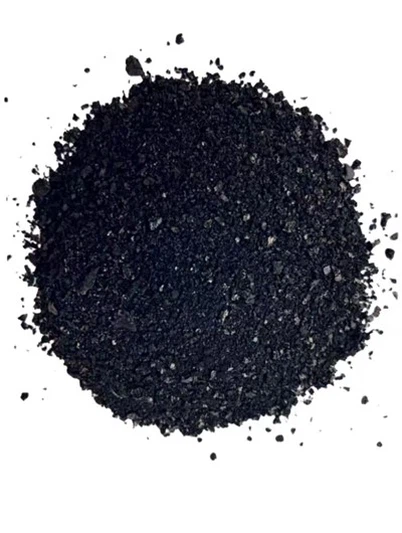
Basic identification information includes the CAS Registry Number 1326-82-5, a reference molecular formula of C6H4N2O5, and the EINECS number 215-444-2. In appearance, it is a shiny black flake, granular solid, or powder.
II. Physical and Chemical Properties
2.1 Basic Characteristics
Sulphur Black is insoluble in water and alcohol, but it dissolves in a sodium sulfide solution, forming a dark green leuco form. It has a melting point of approximately 25 degrees Celsius. It is soluble in hot concentrated sulfuric acid, yielding a green-blue color, and dilution with water produces a black precipitate.
2.2 Quality Standards
According to the Chinese chemical industry standard HG/T3427-2001, Sulphur Black typically appears as shiny black flakes or granules. The color shade should be close to the standard sample, and the strength should be 100% of the standard. Key specifications include a moisture content not exceeding 6.0%, insolubles in sodium sulfide solution not exceeding 0.3% to 0.5%, and free sulfur content not exceeding 0.5%.
2.3 Shade Classification
Depending on the production process, Sulphur Black can exhibit different tones. The BN type has a blueish shade, the BRN type has a blueish-red shade, and the RN type has a reddish shade. Double-strength types, such as BR 200% and BRN 200%, indicate double the concentration of standard types.
III. Production Process
The industrial production of Sulphur Black primarily utilizes the boiling method. The process begins with 2,4-dinitrochlorobenzene as the starting raw material. This undergoes hydrolysis with a sodium hydroxide solution under near-boiling conditions to produce sodium 2,4-dinitrophenolate. This intermediate then undergoes a thionation reaction by mixing with a sodium polysulfide solution at a specific molar ratio and heating to boiling for reduction and sulfur addition reactions. Post-reaction treatment involves air oxidation, drying, and blending to form the final commercial dye. By controlling the molar ratio of phenolate to sodium polysulfide, the sulfur index, and the reaction temperature, the shade of the final product can be adjusted.
IV. Product Classification
Sulphur Black has evolved into various forms to meet different application needs.
4.1 Traditional Powder/Granular Sulphur Black
This form has a general structure of D-S-S-D. It is insoluble in water and requires dissolution by boiling with sodium sulfide before application. It is used for dyeing cotton, linen, and viscose fibers.
4.2 Solubilized Sulphur Black
With a general structure of D-SSO3Na, this type introduces water-soluble groups, achieving solubility over 150 grams per liter at 20 degrees Celsius and offering good leveling properties. According to the standard GB/T25809-2010, it has a moisture content not exceeding 7.0% and solubility not less than 60 grams per liter at 60 degrees Celsius. Its advantages include uniform color yield, good penetration, and no need for anti-tendering treatment. Its applications extend to dyeing chrome-tanned leather and spun-dyeing of viscose fibers.
4.3 Liquid Sulphur Black (Eco-friendly)
This form has a structure of D-SNa and contains pre-reducing agents. It is a liquid that can be diluted directly with water for use, eliminating the need for dissolving with sodium sulfide. Advantages include low impurities, high dye uptake, and dry and wet rubbing fastness approximately 0.5 grades higher than powder forms. It is environmentally friendly as the wastewater contains no precipitated impurities, significantly reducing wastewater treatment costs. Applications include dyeing denim yarn, grey fabric, knits, and package dyeing.
4.4 Other Types
Other types include eco-friendly sulphur dyes with sulfur content much lower than ordinary products, offering high purity and stable quality. Sulphur vat dyes are suitable for one-bath dyeing of polyester-cotton blends with disperse dyes. Dispersed sulphur dyes, processed similarly to disperse dyes, are used for dyeing polyester-viscose blends.
V. Dyeing Mechanism and Process
5.1 Dyeing Principle
Similar to vat dyes, Sulphur Black dyes through a reduction-oxidation cycle. In the first step, reduction dissolution occurs as reducing agents like sodium sulfide break the disulfide or polysulfide bonds in the dye, generating thiol groups and forming a water-soluble leuco compound. Next, during exhaustion, the anionic leuco form is adsorbed onto cellulose fibers through van der Waals forces and hydrogen bonding. Finally, oxidation fixing takes place as treatment with air or oxidizing agents converts the leuco compound back to its insoluble state, firmly fixing it onto the fiber.
5.2 Dyeing Process Steps
The process involves several key steps. First, the dye is reduced and dissolved, commonly using sodium sulfide as the reducing agent. Then, the leuco compound is exhausted onto the fiber, often using a small liquor ratio and adding electrolytes to promote exhaustion. Oxidation follows, either by air exposure or using an oxidizing agent. Finally, aftertreatment includes washing, oiling, anti-tendering treatment, and fixing.
5.3 Dyeing Fastness
At a 6% depth on cotton, Sulphur Black demonstrates good fastness properties. Lightfastness is excellent, typically reaching grade 6. Wash fastness at 95 degrees Celsius for color change is grade 3 to 4, and perspiration fastness for color change is grade 4 to 4.5. Dry rubbing fastness is grade 2 to 3, while wet rubbing fastness is lower at grade 1 to 2. Heat pressing fastness at 200 degrees Celsius is grade 4.
VI. Main Application Areas
The primary application for Sulphur Black is in dyeing cotton textiles, including yarns, grey fabrics, and knits. It is also used for dyeing linen fibers, viscose fibers, and their blends. Solubilized Sulphur Black finds additional applications in leather dyeing, paper dyeing, and spun-dyeing of viscose fibers.
VII. Precautions and Problem Solving
7.1 Fiber Tendering Problem
The tendering phenomenon, also known as fiber brittleness, occurs because Sulphur Black molecules contain active sulfur in polysulfide chains. Under humid and hot conditions, this sulfur is easily oxidized in air to form sulfuric acid, which catalyzes the acid hydrolysis of cellulose fibers, leading to a loss of fabric strength.
Preventive measures include controlling dye usage, such as not exceeding 700 grams per package for certain types. Thorough washing is essential to remove residual dye and free sulfur. Anti-tendering treatment using agents like urea, soda ash, or sodium acetate should be applied. Goods should be dried promptly after dyeing, and after drying, they must be cooled to room temperature before baling to prevent heat buildup. Using tender-resistant grades is also recommended, as these are manufactured with additives like formaldehyde and monochloroacetic acid to stabilize the unstable sulfur atoms.
7.2 Environmental Issues
Traditional Sulphur Black has drawbacks including the use of excess sodium sulfide, which generates sulfur-containing wastewater. The dyeing process can also produce toxic hydrogen sulfide gas, and wastewater treatment costs are high.
Solutions to these issues involve adopting eco-friendly liquid Sulphur Black, which eliminates the need for sodium sulfide dissolution. Using a binary reducing system of glucose and sodium hydrosulfite is another approach. Developing and using solubilized Sulphur Black also simplifies the process and reduces environmental impact.
VIII. Packaging and Storage
8.1 Packaging Specifications
Traditional Sulphur Black products are typically packaged in iron drums lined with plastic bags, with a net weight of 25 kilograms per drum. Solubilized products also use iron drum packaging, available in 25 or 50 kilogram sizes. Other packaging options such as woven bags or cartons can be arranged according to user requirements.
8.2 Storage and Transport Conditions
For storage, Sulphur Black should be kept in a dry, well-ventilated place away from direct sunlight, protecting it from moisture and heat. During transport, goods should be handled with care to avoid damaging the packaging. Special attention should be paid to solubilized Sulphur Black due to its strong hygroscopicity.
IX. Technical Development Trends
The development of Sulphur Black is moving towards more environmentally friendly options, with liquid and eco-friendly products gradually replacing traditional powder forms, a trend already widely adopted in Europe and America. Solubilization is expanding applications into fields like leather and paper, increasing product value. Stability improvements mean liquid products offer better storage and transport stability than powder forms, avoiding the significant batch-to-batch variation issues common with powders. Process simplification with new product types eliminates the need for sodium sulfide dissolution, reducing raw material waste and lowering wastewater treatment costs.
This classic dye, with over a century of history, continues to be revitalized through technological innovation, maintaining its cost advantage while developing towards greater environmental friendliness, efficiency, and stability.