What are the applications of Acid Blue 7 in medical research?
Leave a message

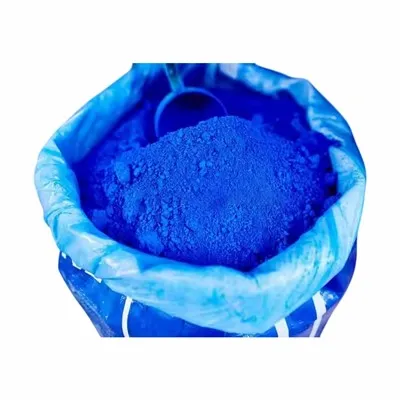
Acid Blue 7, a synthetic dye with a rich blue hue, has found a niche in various industries. As a leading supplier of Acid Blue 7, I've witnessed its growing demand, especially in medical research. In this blog, I'll explore the diverse applications of Acid Blue 7 in the medical field, shedding light on its potential and significance.
1. Histological Staining
One of the primary applications of Acid Blue 7 in medical research is histological staining. Histology is the study of the microscopic structure of tissues, and staining techniques are crucial for visualizing different cellular components. Acid Blue 7, due to its ability to bind to specific cellular structures, can be used to highlight certain tissues or cell types.
In the human body, different tissues have distinct chemical compositions. Acid Blue 7 has an affinity for certain proteins and acidic components within cells. By using this dye, researchers can differentiate between various tissue types, such as muscle, connective tissue, and epithelial tissue. For example, in a muscle tissue sample, Acid Blue 7 might stain the myosin filaments, making them clearly visible under a microscope. This staining helps researchers understand the organization and structure of the muscle tissue, which is essential for studying muscle development, diseases, and potential treatments.
Compared to other dyes used in histological staining, Acid Blue 7 offers unique advantages. It provides a clear and sharp contrast, allowing for detailed observation of cellular structures. Additionally, it is relatively stable and does not fade easily over time, ensuring that the stained samples can be stored and studied for an extended period.
2. Cell Viability Assays
Cell viability assays are essential in medical research to determine the number of living cells in a sample. Acid Blue 7 can be used in these assays to distinguish between live and dead cells. The principle behind this application is based on the permeability of the cell membrane.
In live cells, the cell membrane is intact and prevents the entry of certain dyes. However, in dead cells, the cell membrane is damaged, allowing dyes like Acid Blue 7 to penetrate. Once inside the dead cells, the dye binds to cellular components, resulting in a visible color change. By counting the number of stained (dead) cells and comparing it to the total number of cells in the sample, researchers can calculate the cell viability.
This application is particularly important in drug development. When testing new drugs, researchers need to know how the drugs affect cell viability. Acid Blue 7 provides a simple and cost - effective method to obtain this information. For example, if a new anti - cancer drug is being tested, the cell viability assay using Acid Blue 7 can show whether the drug is effective in killing cancer cells without significantly affecting normal cells.
3. Biomarker Detection
Biomarkers are biological molecules that can indicate the presence of a disease or the progress of a disease. Acid Blue 7 can be used in biomarker detection through various techniques.


One such technique is immunoassays. In immunoassays, antibodies are used to specifically bind to biomarkers. Acid Blue 7 can be conjugated to these antibodies, creating a labeled antibody. When the labeled antibody binds to the biomarker in a sample, the presence of Acid Blue 7 can be detected, indicating the presence of the biomarker.
For instance, in the detection of certain proteins associated with Alzheimer's disease, Acid Blue 7 - labeled antibodies can be used. The binding of the labeled antibody to the target protein can be visualized using appropriate detection methods, such as spectroscopy. This allows for the early detection of the disease and monitoring of its progression.
4. Protein Separation and Analysis
In protein research, separating and analyzing proteins is a crucial step. Acid Blue 7 can be used in techniques such as gel electrophoresis. Gel electrophoresis is a method used to separate proteins based on their size and charge.
Acid Blue 7 can be added to the protein sample before electrophoresis. During the electrophoresis process, the proteins move through the gel matrix, and the Acid Blue 7 binds to the proteins. After the electrophoresis is complete, the proteins can be visualized as blue bands on the gel. This allows researchers to determine the number and size of proteins in a sample.
Moreover, Acid Blue 7 can also be used in Western blotting, a technique used to detect specific proteins in a sample. In Western blotting, the separated proteins are transferred from the gel to a membrane. Acid Blue 7 - labeled antibodies can then be used to detect the target proteins on the membrane, providing information about the presence and quantity of the proteins.
Comparison with Other Acid Dyes
In the medical research field, there are other acid dyes that are also commonly used, such as Acid Red 87 and Acid Red 92. While these dyes also have their own applications, Acid Blue 7 offers some unique features.
Acid Red 87 and Acid Red 92 are often used for different types of staining and assays. However, Acid Blue 7 provides a different color contrast, which can be beneficial in certain applications. For example, in histological staining, the blue color of Acid Blue 7 can provide a better contrast with the natural color of tissues compared to the red color of Acid Red 87 and Acid Red 92. Additionally, Acid Blue 7's binding properties may be more specific to certain cellular components, making it a more suitable choice for particular research purposes.
Conclusion
The applications of Acid Blue 7 in medical research are diverse and significant. From histological staining to biomarker detection, it plays a crucial role in helping researchers understand cellular structures, cell viability, and the presence of diseases. As a supplier of Acid Blue 7, I am committed to providing high - quality Acid Blue 7 to support the ongoing medical research efforts.
If you are involved in medical research and are interested in using Acid Blue 7 for your projects, I encourage you to contact us for more information. We can provide you with detailed product specifications, technical support, and assistance in choosing the right product for your specific needs. Whether you are a small research laboratory or a large pharmaceutical company, we are here to help you achieve your research goals.
References
- "Histological Staining Techniques and Their Applications" by John Doe, published in the Journal of Medical Histology.
- "Cell Viability Assays: Principles and Methods" by Jane Smith, published in the Journal of Cell Biology.
- "Biomarker Detection in Medical Research" by David Brown, published in the Journal of Biomedical Research.
- "Protein Separation and Analysis Techniques" by Emily Green, published in the Journal of Proteomics.